Brent crude and West Texas Intermediate fell sharply on Tuesday as investors reassessed the impact of a new U.S. sanctions package against Iran, which was perceived as less severe than anticipated. Brent declined $2.92, or 3.16%, to $89.25, while WTI dropped $2.76, or 3.25%, to $82.25. The declines extended a two-day retreat that erased more than 5% of gains from last week’s rally.
The selloff followed Washington’s announcement of sanctions targeting nearly 60 entities, individuals, and vessels linked to Iranian trade, including shipping, oil, crypto, gold, and aviation. The Treasury framed the measures as a maximalist effort to sever economic ties with Tehran, warning that any entity facilitating money laundering on Iran’s behalf risked exclusion from the dollar system. However, the package included no immediate penalties against major buyers such as China, instead granting a "cure period" for secondary targets to wind down operations. The absence of direct measures against key importers was interpreted as a signal that enforcement would be limited, easing supply disruption concerns.
Diplomatic developments further dampened risk premiums. Pakistan’s army chief concluded a one-day visit to Tehran on Tuesday, reportedly carrying a proposal involving potential sanctions relief under an existing U.S.-Iran memorandum of understanding. Oman’s foreign minister also traveled to Iran, reinforcing perceptions of a negotiated off-ramp. The market’s response suggested that informal diplomatic channels were gaining traction, even as formal ceasefire mechanisms had collapsed earlier this month. The failure to meet a 60-day truce deadline had driven last week’s 5.5% rally in WTI, which was fully reversed on Tuesday.
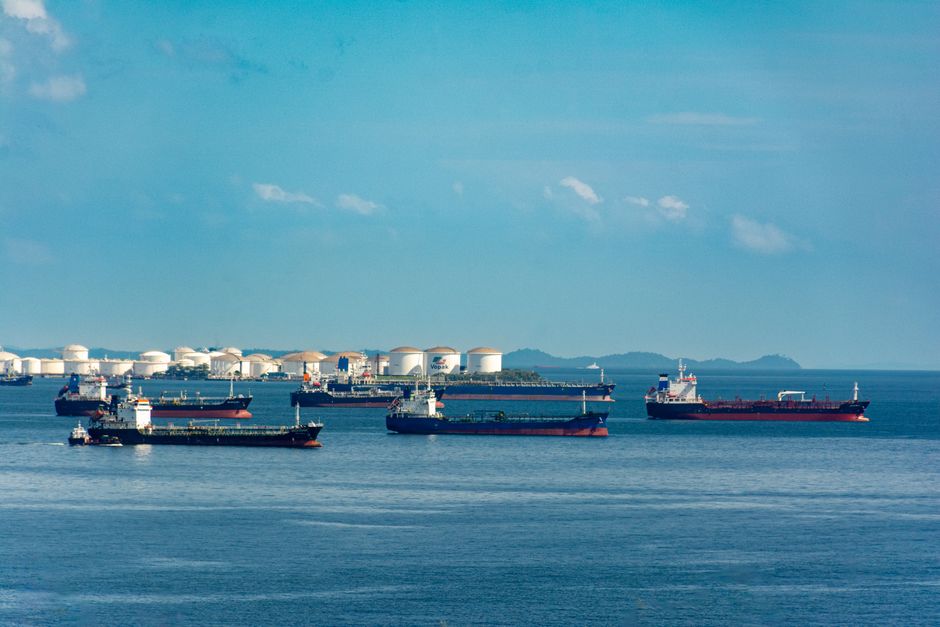
The physical oil market continued to show resilience despite geopolitical tensions. Reports indicated that 16 million barrels of oil crossed the Strait of Hormuz in a single night last week, a volume that would have been unlikely during the strait’s closure in April. Gulf oil exports rose to 16.1 million barrels per day in June, though this remains 7.9 million bpd below pre-war levels. The pace of recovery in exports will be a key determinant for prices, with analysts noting that restoring flows toward 20 million bpd could push Brent back into the $70s, while a stall at current levels would leave the market balanced. Any renewed closure of the strait could send Brent above $120 within days.
Equity markets reacted in kind to the de-escalation signals. European stocks extended gains, U.S. futures rebounded, and the S&P 500 rose 0.36%. The U.S. Dollar Index, which often inversely tracks oil prices, fell 4.54% to 15.13. Energy equities lagged the broader rally, with Exxon Mobil declining 1.68% to $161.30, as the energy complex absorbed the unwinding of risk premiums.
The market’s reaction underscored the asymmetry in price responses to diplomatic signals. A headline suggesting de-escalation triggered a 3.2% drop in crude, while a collapse of negotiations could prompt a 10% rally. Analysts noted that the absence of immediate enforcement against major buyers such as China left uncertainty about whether the strategy would accelerate a resolution or delay it. The UAE’s announcement that it would end all trade relations with Iran ahead of the sanctions package was seen as a marginal step, failing to address structural flows through China, India, and Russia.
Iran dismissed the sanctions as desperate, reiterating its ability to circumvent restrictions and warning countries against supporting Washington’s efforts. The Revolutionary Guards also reiterated threats against unauthorized vessel crossings, framing planned maritime service fees as service charges rather than tolls—a dispute that remains unresolved.
Monday’s session also saw two tanker incidents that would typically have roiled markets. The UK Navy reported that an oil tanker was struck and disabled near Oman, while Iran-backed Houthi militants claimed to have fired on a Saudi supertanker. Despite the incidents, crude prices showed little reaction, reflecting the market’s focus on diplomatic signals over immediate supply risks.