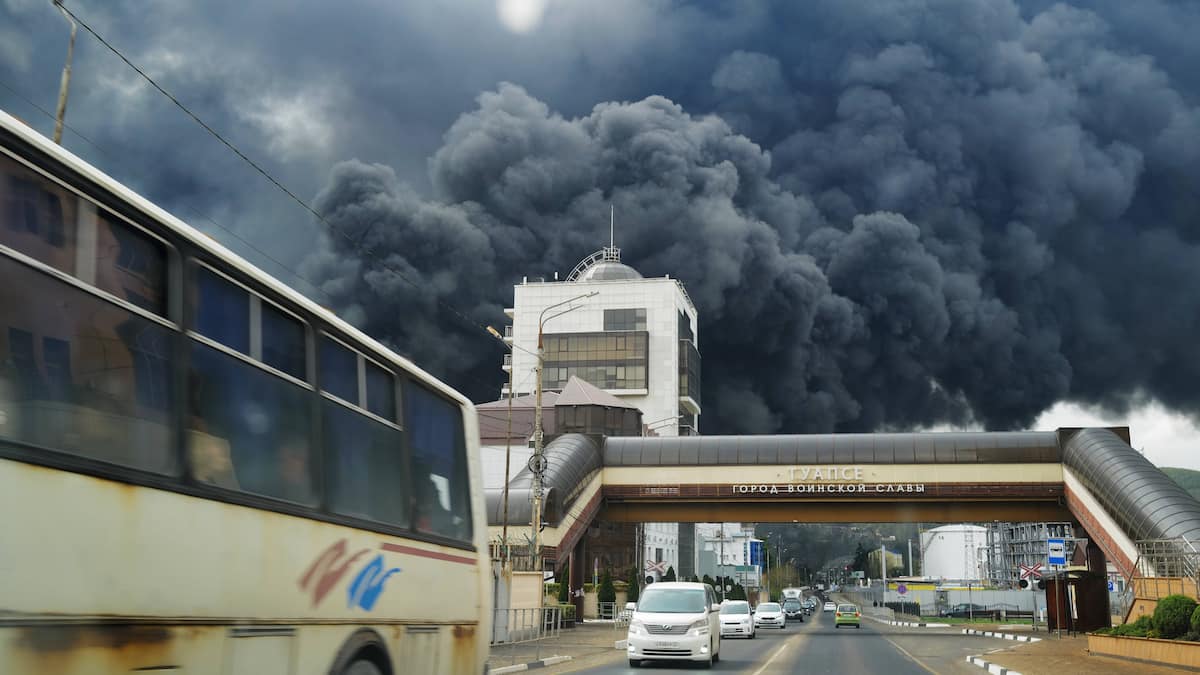
Ukrainian drone strikes in September forced five of Russia's six largest diesel refineries to sharply reduce output or cease operations, according to Reuters calculations based on market participant data.
The six facilities – Omsk, Kirishi, Taneco, Volgograd, NORSI and Perm – together account for roughly half of the country's diesel production. Insiders say the Kirishi plant was taken offline completely, while NORSI and Volgograd are operating at about 25% of capacity. Taneco was also hit by drones on Sunday, though the full impact remains unclear.
The International Energy Agency reported that, on average, a Russian refinery was struck by a drone every three days during the first eight months of 2026. Prior to the attacks and subsequent export curbs, Russian diesel exports in June were estimated at under one million tonnes, down from the normal pre‑war level of about 2.5 million tonnes per month. Turkey and Brazil historically absorbed roughly half of the available shipments, according to LSEG data, before July's export restrictions took effect.
The reduced output has added pressure to an already strained global fuel market, which is coping with supply disruptions from the Iran conflict. In the United States, the nationwide average diesel price recently rose above six dollars per gallon, as reported by fuel‑price tracker GasBuddy.
U.S. President Donald Trump appealed to Ukrainian President Volodymyr Zelensky to halt attacks on Russian diesel infrastructure, arguing that the strikes harm the world’s fuel supply. Ukraine, which frequently targets Russian energy assets, maintains that the refineries are legitimate military targets.
The combined effect of the drone campaign and Moscow’s export limits is expected to tighten diesel availability worldwide, potentially sustaining higher prices in key markets.