





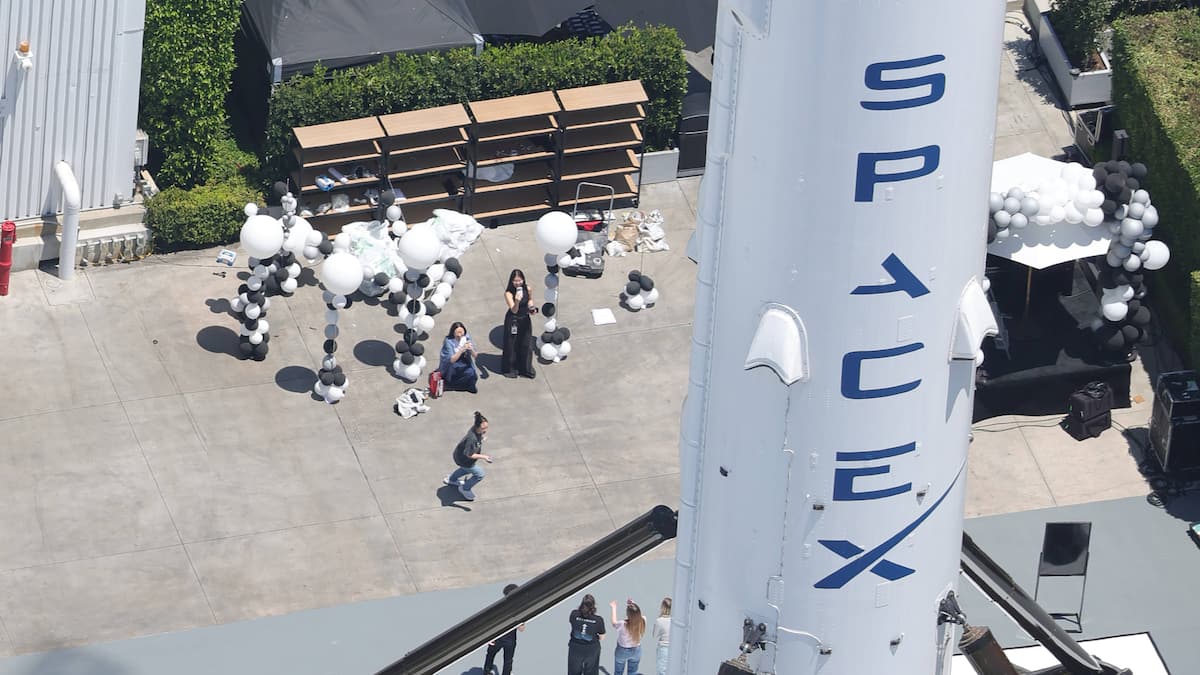
SpaceX shares could see a significant weighting increase in the Nasdaq-100 index following the quarterly rebalance, driven by a rise in freely tradable shares that may unleash billions in passive fund purchases.
The Nasdaq-100 calculates each constituent's weight based on the lower of two figures: total market capitalization or three times the free float. Companies with limited freely tradable shares — such as those subject to insider lock-ups — therefore enter the index at a discount to their full valuation. SpaceX currently carries a 1.25% weight, ranking 19th in the index, despite boasting a market value exceeding $2 trillion that would make it the sixth-largest company in the Nasdaq-100.
More than one billion shares have now exited lock-up periods, pushing the free float up from under 10% immediately after the June IPO to nearly 30%. Following the next quarterly adjustment, SpaceX's index weight could climb to 1.51%, triggering net purchases by index funds and ETFs of approximately $12.4 billion, according to JPMorgan strategists cited by cash.ch.
Index-adjustment results will be published Friday after market close and take effect on September 21. At the end of the second quarter, funds tracking the Nasdaq-100 — including the Invesco QQQ Trust ETF — held combined assets of roughly $1.7 trillion.
SpaceX shares dropped about 1% in early trading Tuesday. Since the record-breaking IPO in June, the stock has traded sideways over the past four weeks, oscillating between $133 and $150 near the $135 offering price. With few near-term catalysts beyond the index change, the rebalance may provide the needed momentum, said Steve Sosnick, chief strategist at Interactive Brokers.
"Either investors sell newly released shares into the expected buying, or the price rises because of demand from index funds," Sosnick said. "Demand from funds like the QQQ will certainly increase regardless."
Ed O'Gorman, CEO of River Wealth Advisors, noted that "the market price will be pushed around by buying to some extent" and added that it will take time before the market properly prices the share.
In August, the first batch of shares exiting lock-up coincided with the first quarterly results, but fears of a sell-off did not materialize. A second lock-up expiration one week later also saw insiders largely hold their positions, supporting the share price.
A further roughly one billion shares are expected to become available by late October, with an additional 1.3 billion following third-quarter earnings in mid-November. "The more important date comes later with the numbers in November," O'Gorman said. "Then a very large amount of shares will hit the market."
SpaceX joined the Russell-1000 Index in June but remains ineligible for the S&P 500, which requires at least twelve months of public trading history — making inclusion unlikely before mid-2027.






