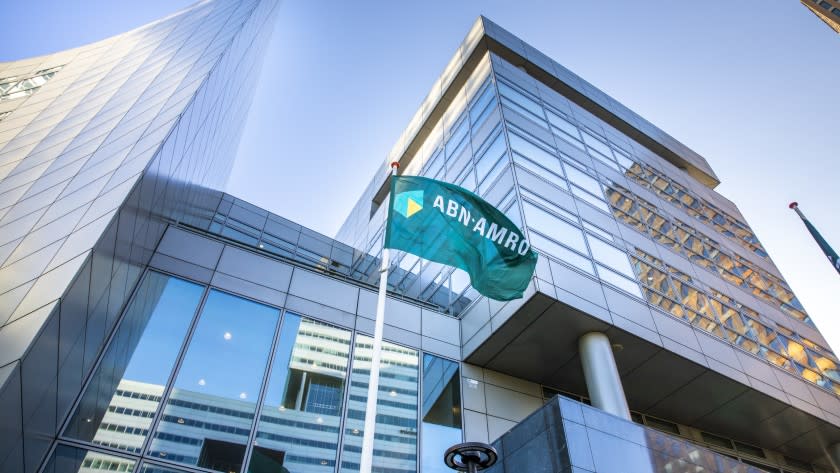
ABN AMRO Group reported progress in capital strength and cost management at its presentation to Bank of America’s 31st Annual Financials CEO Conference on September 24, 2026, highlighting a 30% increase in profits since its Capital Markets Day baseline set in November 2025. The bank’s return on equity (ROE) surpassed 12%, exceeding its target, while the CET1 capital ratio reached 15.3%—above its self-set threshold of more than 13.75%—assuming a 100% dividend payout. Trading at $42.14, the stock remains near its 52-week high of $44.80, reflecting investor confidence in its financial trajectory.
Fee income growth contributed significantly, with two consecutive quarters exceeding EUR 600 million, and a 12-month compound annual growth rate of 25% (underlying growth of 15% excluding the German acquisition of Hauck Aufhäuser Lampe). Net interest income guidance was upgraded by EUR 250 million in the second quarter, with an additional EUR 250 million potential benefit from forward curve improvements. The dividend yield stood at 5.54%.
Cost reductions played a critical role, with ABN AMRO achieving EUR 300 million of its EUR 900 million absolute savings target, down 2,340 full-time employees (45% of its 5,200-target reduction plan), and lowering cost guidance twice in 2024 by EUR 100 million each quarter. The cost-income ratio is projected to fall below 55% by 2028, from historical levels above 60%. The bank assumed a 2% inflation outlook in its cost-saving plans.
Capital optimization efforts included EUR 9 billion of EUR 10 billion risk-weighted asset (RWA) optimization, with EUR 6 billion coming from its corporate banking division. Removing mortgage floors was expected to add EUR 7 billion of relief in the fourth quarter, while residential mortgages—accounting for 60% of its balance sheet—had an average loan-to-value ratio of 52%. Expected credit loss guidance ranged between 10 and 15 basis points through the cycle.
Strategic integration of NIBC, completed in summer 2024, is projected to deliver an 18% return on invested capital and increase mortgage market share by 2% to 2.5%, raising it to 20% to 21.5% post-merger. Deposit market share stands at 15%, with less than 20% of Dutch deposits held in current accounts amid a competitive landscape of 30 to 35 deposit license holders.
Operational upgrades included scaling AI to 50 live projects, achieving 25% to 30% efficiency gains in software development (up from 15% to 20% expectations), and targeting the elimination of up to 35% of FTE-intensive roles in customer care, operations, and financial crime through AI and offshoring. Branch network consolidation to 26 locations further streamlined operations, with digital and remote banking handling daily services.
CEO Ferdinand Vaandrager emphasized shorter-term strategic targets by 2028, focusing on cost management alongside capital buffers. He noted the bank’s commitment to maintaining a disciplined approach to capital and operational efficiency, aligning with its broader goal of sustainable growth and market positioning.