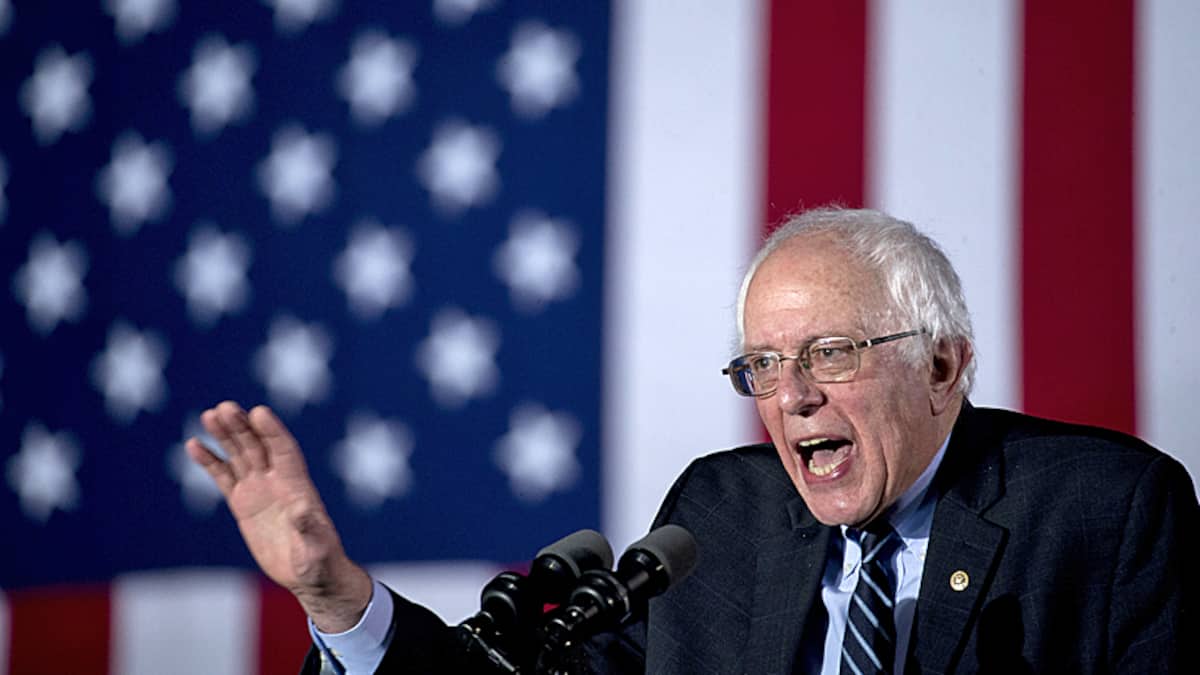
In an unusual cross-party alliance, US Senator Bernie Sanders and Steve Bannon, a close ally of Donald Trump, called for sweeping restrictions on artificial intelligence during a joint event in Washington on Tuesday.
Sanders, who identifies as a democratic socialist, warned that AI holds the potential to destroy tens of millions of jobs and wipe out entire professions, making it harder for young people to enter the workforce. He also raised the risk that the technology could spiral beyond human control, noting that AI has already been used to create new viruses, potentially enabling bioweapons or a global pandemic in the wrong hands.
Sanders urged President Trump to negotiate a pause on AI development with Chinese President Xi Jinping at their upcoming summit next week. He also criticized technology executives, including SpaceX CEO Elon Musk, for concentrating excessive power in the AI sector.
Bannon, a former White House strategist, called AI "the defining issue of our time" and praised Sanders' assessment of the risks. With Congress too slow to pass legislation, Bannon argued the government must act by executive decree. He also called for cutting China off from computer chips manufactured in the United States, blaming Trump's reluctance to regulate the technology on pressure from Big Tech.
Trump, meanwhile, downplayed industry leaders' concerns on Monday, saying the United States already has adequate safeguards. House Speaker Mike Johnson backed the president on Tuesday, arguing against any moratorium on AI development, saying it would cost the US its competitive edge over China. "They can regulate themselves," Johnson said.
Behind closed doors, the US Congress is debating potential AI legislation. Republican Senator Bernie Moreno expressed doubt about the pace of the process, saying, "We're dealing with things that may not even be relevant in four years."
The seriousness of concerns within the industry was highlighted last week when Anthropic researcher Jacob Coxon resigned, saying some AI developers believed the technology could eradicate humanity by the end of the decade.