





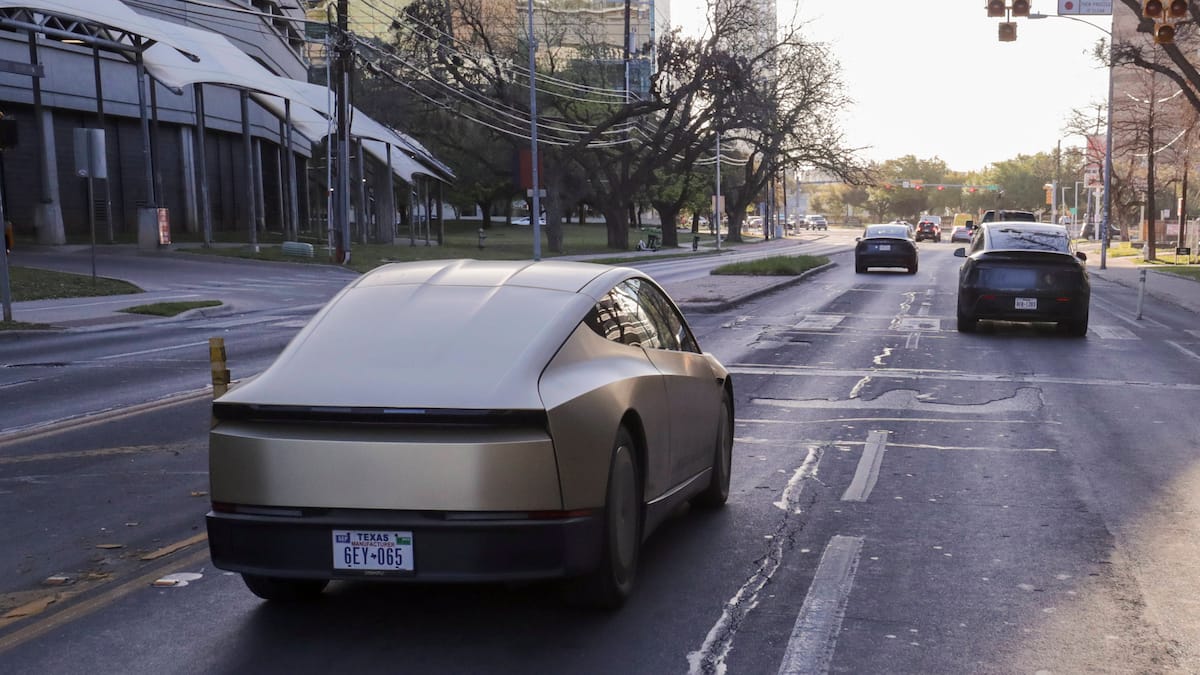
Tesla is facing scrutiny from the US National Highway Traffic Safety Administration over its Robotaxi Cybercab, which launched in Austin, Texas, in early September without a steering wheel or pedals.
The NHTSA sent Tesla a questionnaire asking how the vehicle can comply with federal rules requiring a foot-operated brake. The agency set a response deadline of late September. Continued violations could trigger penalties of up to $139 million.
Tesla self-certified that its Cybercabs meet standard US traffic-safety regulations before beginning limited operations in Austin, a common procedure for automakers. The NHTSA raised objections immediately, noting that virtually all vehicles operating on American roads must be equipped with both a steering wheel and pedals.
The regulator does allow an exemption: after review, companies can seek permission to put up to 2,500 steering-wheel-free vehicles on US streets. Amazon subsidiary Zoox secured such clearance for its passenger pods operating in Las Vegas and San Francisco. Tesla did not apply for an exemption.
Some Cybercab riders have said they saw controls displayed on the vehicle's screen upon entering, but those inputs appeared unresponsive. Tesla may consider the display-based interface sufficient to satisfy NHTSA requirements.
Meanwhile, rival Robotaxi operator Waymo retained steering elements in thousands of its driverless vehicles, allowing police or fire departments to take control when necessary.
Elon Musk has long held that autonomous driving and humanoid robots will define Tesla's future. Unlike Waymo and other Robotaxi developers, Tesla relies exclusively on cameras rather than costly laser radar systems to perceive its surroundings. The camera-only approach is cheaper but has been criticized by experts and competitors as insufficiently safe. Musk continues to maintain that cameras are adequate.
Despite extensive announcements from the tech billionaire, Tesla has so far deployed only a small number of unsupervised self-driving cars on public roads.





