

U.S. import prices declined by 0.4% in July, defying forecasts for a 0.1% increase and marking the second consecutive monthly drop, data from the Labor Department showed on Tuesday.
The decline was primarily driven by lower crude oil import costs, which offset modest gains in other categories. The July reading follows a revised 0.3% decrease in June, adjusted downward from an initially reported 0.3% rise. Year-over-year, import prices rose 3.4%, easing from prior levels and reinforcing signs of cooling inflationary pressures.
The Federal Reserve’s policy outlook remains in focus as 94 of 104 economists surveyed by Reuters anticipate the central bank will hold its benchmark interest rate steady at 3.50%-3.75% at the September 17-18 meeting. The survey reflects growing confidence in a pause after the Fed’s July 30-31 gathering, where one-quarter of FOMC members voted in favor of a rate hike.
Labor market data released last week added to the mixed economic signals, with nonfarm payrolls unexpectedly falling by 23,000 jobs in July, underscoring uneven momentum in the U.S. economy. The unemployment rate held at 4.1%, while average hourly earnings increased 0.2% month-over-month.
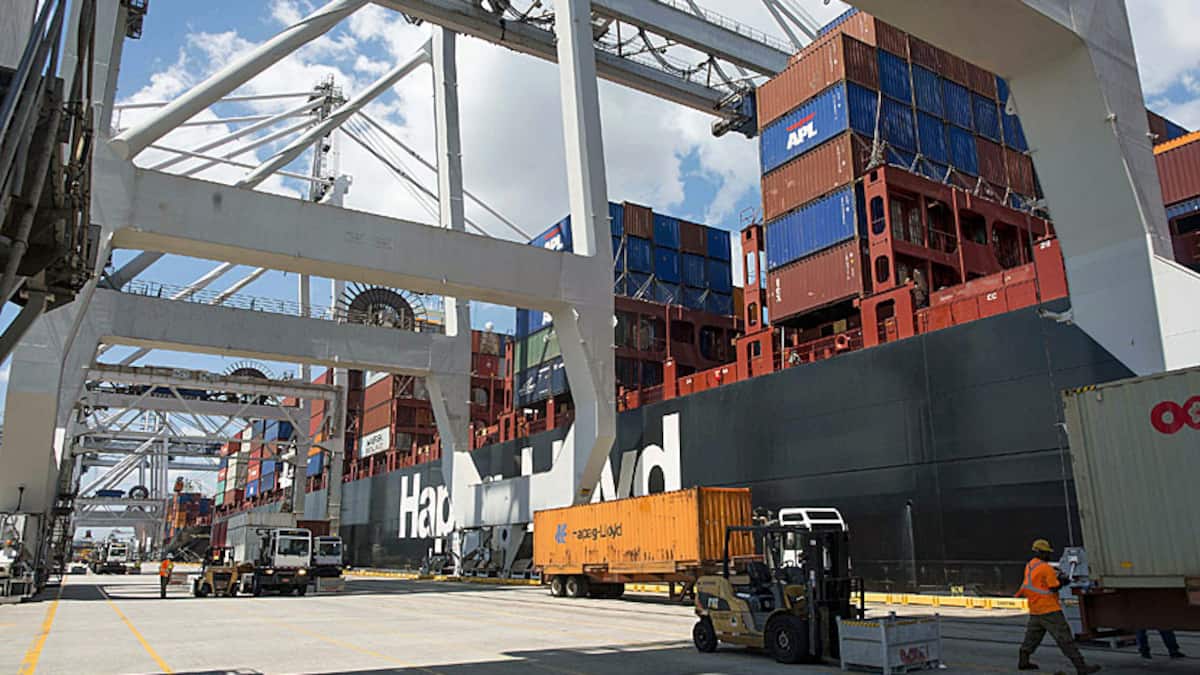
Analysts note that sustained declines in import prices could further ease inflation concerns, potentially influencing the Fed’s decision-making as it balances price stability with labor market conditions. The Port of Savannah, a key entry point for imported goods, has seen steady cargo volumes in recent months, though trade data has shown volatility amid shifting global demand patterns.
The unexpected drop in import prices follows broader disinflation trends observed in recent months, with producer and consumer price indices also trending lower. Market participants will closely monitor upcoming inflation reports, including the August CPI release, for further signals on the Fed’s policy trajectory.
