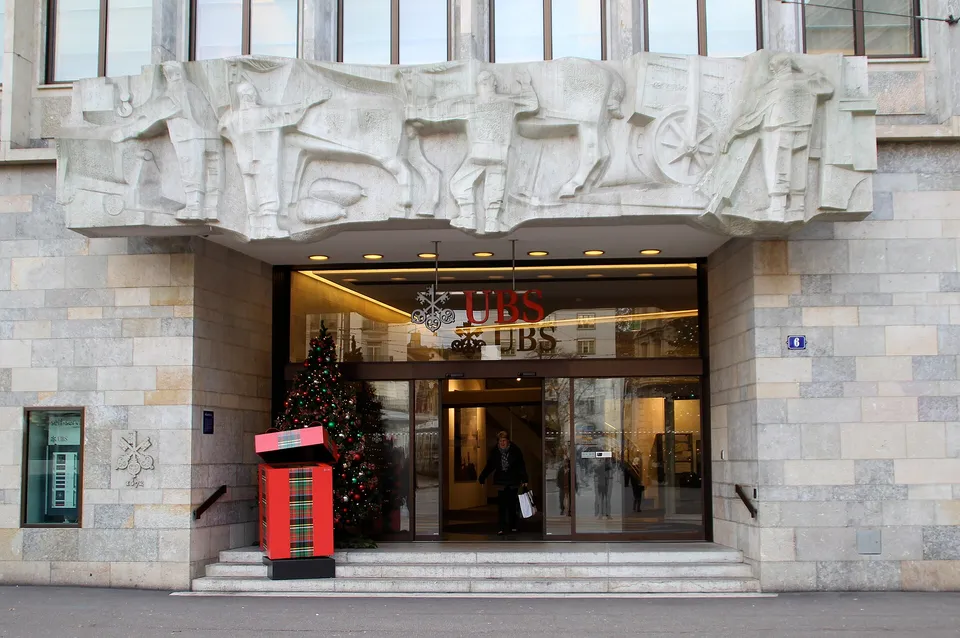
The Swiss National Bank (SNB) has reaffirmed its stance that UBS should fully back its foreign subsidiaries with high-quality capital held in Switzerland, rejecting a parliamentary compromise under debate.
Vice President Antoine Martin stated that the government’s stricter proposal—requiring systemically important banks like UBS to meet capital requirements with Common Equity Tier 1 (CET1) rather than hybrid instruments—remains the optimal approach. Speaking in Basel on Wednesday, Martin emphasized that such measures would strengthen the resilience of Switzerland’s financial system. "The measures proposed by the Federal Council, particularly the full backing of foreign subsidiaries with CET1 capital, would make the Swiss financial market more robust," he said.
The SNB’s intervention signals opposition to a legislative proposal currently under consideration in Bern, which would allow UBS to fulfill up to half of the requirement using lower-quality Additional Tier 1 (AT1) bonds. While AT1 instruments are a cheaper way to bolster capital ratios, they are less secure in a crisis scenario.
The parliamentary committee reviewing the proposal is scheduled to issue its recommendation on Monday, August 31. UBS has described the plan as "extreme," warning it could undermine the bank’s competitiveness.
Martin countered that higher capital requirements do not necessarily impair profitability, citing examples of highly capitalized yet profitable U.S. banks. He added that the SNB also supports the government’s plan to introduce a public liquidity guarantee and set minimum standards for collateral eligible for central bank financing.
The SNB’s push reflects broader concerns about systemic risk in the Swiss banking sector following UBS’s acquisition of Credit Suisse in 2023.