





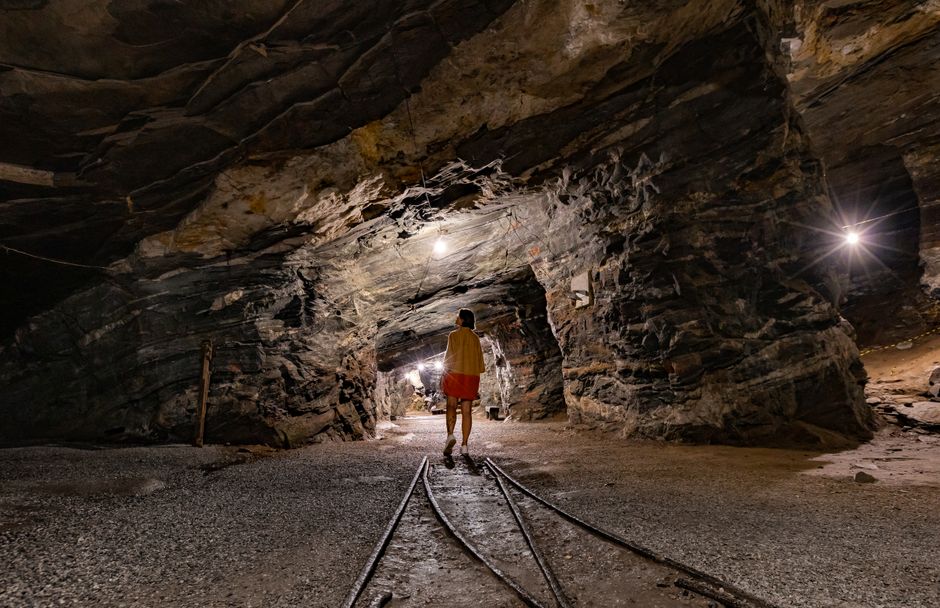
Pan American Silver has begun development of its La Colorada Skarn Project in Zacatecas, Mexico, a $1.9 billion initiative that will take six years to reach first meaningful silver production in 2032, according to the company’s revised preliminary economic assessment.
The project involves sinking a 588 Decline tunnel from an existing mine level, followed by capital development and construction from 2026 to 2031. Commissioning and ramp-up are scheduled for 2032, with steady-state production expected between 2034 and 2038. The skarn deposit holds an indicated resource of 265.4 million tonnes at 36 grams of silver per tonne, roughly one-eighth the grade but twenty-eight times the tonnage of the mine’s existing vein reserves.
The assessment outlines a production schedule of 3.5 million ounces cumulatively from 2027 to 2031, with output rising to 15.4 million ounces in 2032 and 2033 combined. Annual production is projected to reach a band of 14.6 to 17.6 million ounces from 2034 onward, averaging 15.8 million ounces over the Initial Five Year Period (2034–2038). The expanded mine’s peak output is estimated at 19.1 million ounces annually, including contributions from both skarn and vein mineral resources.
Pan American has committed $20 million to the project in the first half of 2026, primarily for drilling, engineering, and tunnel development. The company expects to fund the remaining capital expenditures entirely from operating cash flow, having generated $344 million in attributable free cash flow in the second quarter. No additional permitting is required for the initial decline tunnel, though permits for shafts, the processing plant, and tailings expansion remain pending.
The project’s base case economics assume a silver price of $45 per ounce, despite current spot prices of $68.80. The company’s assessment also notes that the skarn mineral resource was evaluated at $22 per ounce, while the vein mine was assessed at $24 per ounce. The timeline reflects early-stage modeling, with Pan American cautioning that inferred mineral resources are speculative and subject to change.
The project serves as a benchmark for industry supply response times, given its favorable starting conditions: an operating mine with existing infrastructure, workforce, and no discovery risk. However, the six-to-eight-year lag underscores the limitations of high prices in swiftly expanding mine supply. The analysis suggests that while the project will contribute meaningfully in the 2030s, it does little to address near-term supply deficits forecasted for the remainder of this decade.
For silver investors, the project’s timeline reinforces the argument for structural supply constraints. Metals Focus and the Silver Institute project a 46.3 million ounce deficit in 2026, the sixth consecutive year of shortfall. While recycling may partially offset this gap, the scale of the deficit suggests that mine supply, even from high-grade projects like La Colorada Skarn, will not materially influence the market until the 2030s.





