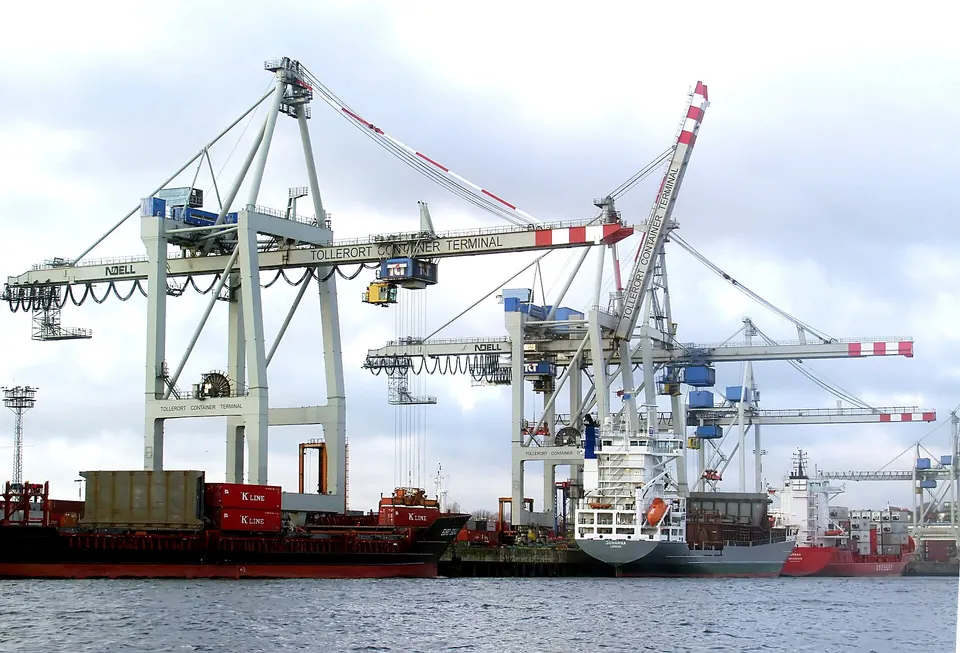
Global shipping operators are navigating a sharp demand contraction in 2026, with U.S. container volumes projected to decline 4.2% year-over-year despite a temporary surge in July. The National Retail Federation and Hackett Associates forecast steady monthly declines through year-end as the front-loading wave triggered by tariff policy shifts dissipates. July U.S. container imports reached 2.5 million TEUs—the fourth-highest July on record—while Chinese-origin shipments rose to 873,000 TEUs, the highest monthly volume in a year.
Ocean freight rates remain elevated despite weakening demand, supported by persistent fuel and canal surcharges. A.P. Moller-Maersk reported a 22% year-over-year increase in Q2 freight rates, while Expeditors International achieved an all-time high stock price of $188.31 on August 14, posting Q2 earnings of $2.03 per share versus a $1.69 consensus. UBS maintained a $210 price target for Expeditors, citing its strong performance amid market dislocation. J.B. Hunt reported a 16% year-over-year increase in Eastern network growth for Q2, benefiting from rail’s cost advantages over truckload shipping.
Supply chain chokepoints continue to exert upward pressure on costs and transit times. The Red Sea remains disrupted by Houthi threats, forcing vessels to reroute via the Cape of Good Hope, while the Panama Canal faces tighter draft restrictions and geopolitical disputes. The Strait of Hormuz remains a high-risk zone due to U.S.-Israeli/Iran tensions, inflating fuel surcharges and insurance premiums. Inland waterways such as the Rhine River are experiencing reduced cargo loads amid record heat, disrupting European supply chains.
The Panama Canal crisis deepened in February 2026 when the government seized the Balboa and Cristobal terminals, triggering an arbitration claim by CK Hutchison exceeding $1.5 billion. The dispute halted a $19 billion-plus sale of 43 global terminals to a BlackRock-backed consortium. Meanwhile, the U.S. estimates annual tariff revenue losses of $19 billion to $26 billion from Chinese-origin goods transshipped through countries like Vietnam, which has pledged a constructive response to the allegations.
Strategic M&A activity faces headwinds, with Israel expected to block ZIM Integrated Shipping’s $4.2 billion sale to Hapag-Lloyd over national security concerns. Analysts warn of potential 2027 downside risks, including new vessel capacity additions and a potential normalization of Red Sea routes, which could compress spot rate premiums and shorten trade routes.