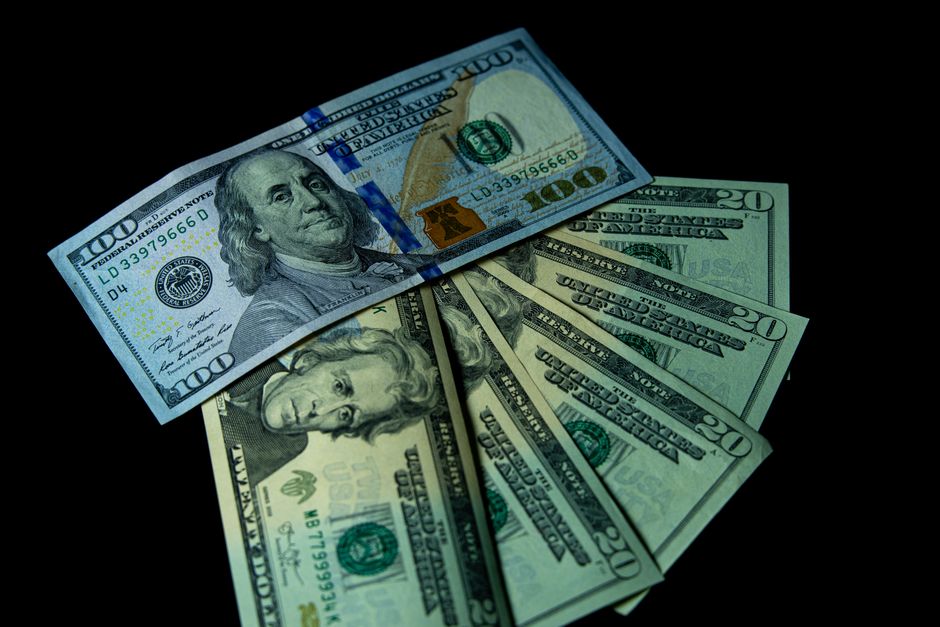
The U.S. dollar extended losses on Thursday as Treasury Secretary Bessent’s announcement of a potential fiscal initiative to curb rising borrowing costs overshadowed earlier signals of increased Treasury buybacks. The greenback’s retreat came despite Bessent’s pledge to at least double quarterly repurchases of U.S. bonds, a move analysts suggested would have limited impact in the $31.5 trillion market with average daily turnover of $1.0–$1.2 trillion.
Japanese investors accelerated foreign asset purchases in the first two weeks of August, acquiring approximately $36.5 billion, according to Ministry of Finance data. The purchases followed recent currency intervention and underscored market skepticism toward U.S. claims of control over strategic shipping lanes, including the Strait of Hormuz. Bessent’s remarks on Tuesday, which included surprise at a 2% rally in October Treasury futures, did little to sway investor sentiment, with the 10-year yield retreating to around 4.70%, near pre-announcement levels.
Bessent later indicated the administration would unveil additional measures to address elevated yields, a signal that contributed to the dollar’s broader decline. The announcement did not include deficit-reduction plans, with the fiscal deficit projected at roughly 6% of GDP for the year. The U.S. 2-10-year yield curve remains twice as steep as it was in mid-June when Kevin Warsh chaired his first Federal Open Market Committee meeting.
Geopolitical developments added to market uncertainty, with North Korea conducting a third weapons test this month by firing a barrage of short-range ballistic missiles late Wednesday. Meanwhile, diplomatic signals from Pyongyang remained mixed, as Kim Jong-un’s sister stated she was “unaware” of any direct communication with Washington, despite President Trump’s outreach to the North Korean leader. The scaled-back U.S.-South Korea military exercises, intended to ease tensions, risked straining relations with Seoul and potentially prompting trade concessions.
In currency markets, the euro advanced to near $1.1710 before consolidating around $1.1665, with technical resistance noted at the $1.17 level, corresponding to the 50% retracement of the euro’s decline from January’s high near $1.2080. The next retracement level, at 61.8%, lies just below $1.18. The dollar’s drop against the yen pushed USD/JPY to nearly ¥158, a level aligning with the 38.2% retracement of the post-intervention rally. The greenback recovered slightly to ¥159.15 before easing back to ¥158.35, where the 200-day moving average is situated. A break below ¥158 could extend losses toward ¥157.50, according to the analysis.
Sterling strengthened to $1.3675, supported by broad dollar weakness and a firm preliminary August PMI reading, though retail sales data disappointed. The British pound faces technical resistance in the $1.3700–$1.3710 range. The Canadian dollar also gained ground, with USD/CAD declining to about CAD1.3745 after an initial dip to CAD1.3755, its weakest level in three months. Support is seen in the CAD1.3700–1.3715 area.
The Australian dollar approached resistance between $0.7170 and $0.7200, having briefly touched $0.7165 despite a softer composite PMI. Meanwhile, the Mexican peso consolidated within Wednesday’s range, holding above MXN16.9425 but failing to break above MXN17.00, while the Brazilian real capped gains slightly above BRL5.20. The offshore yuan weakened to CNH6.7180, extending a three-and-a-half-year low near CNH6.72, despite a marginally higher People’s Bank of China reference rate.
Commodities showed mixed performance, with gold futures briefly surpassing $4,600, their highest level since mid-May, before paring gains. The move retraced more than 38.2% of the decline from the January record high near $5,595. A sustained close above $4,575 would be seen as constructive, with the next retracement target at $4,770. Silver prices rose to nearly $70, their strongest level since June 18.
Oil markets extended gains, with October WTI crude reaching nearly $87.70, its highest since July 23, before consolidating between $85.80 and $87.50. The contract has gained more than 7% this week following a 5.6% rally last week.