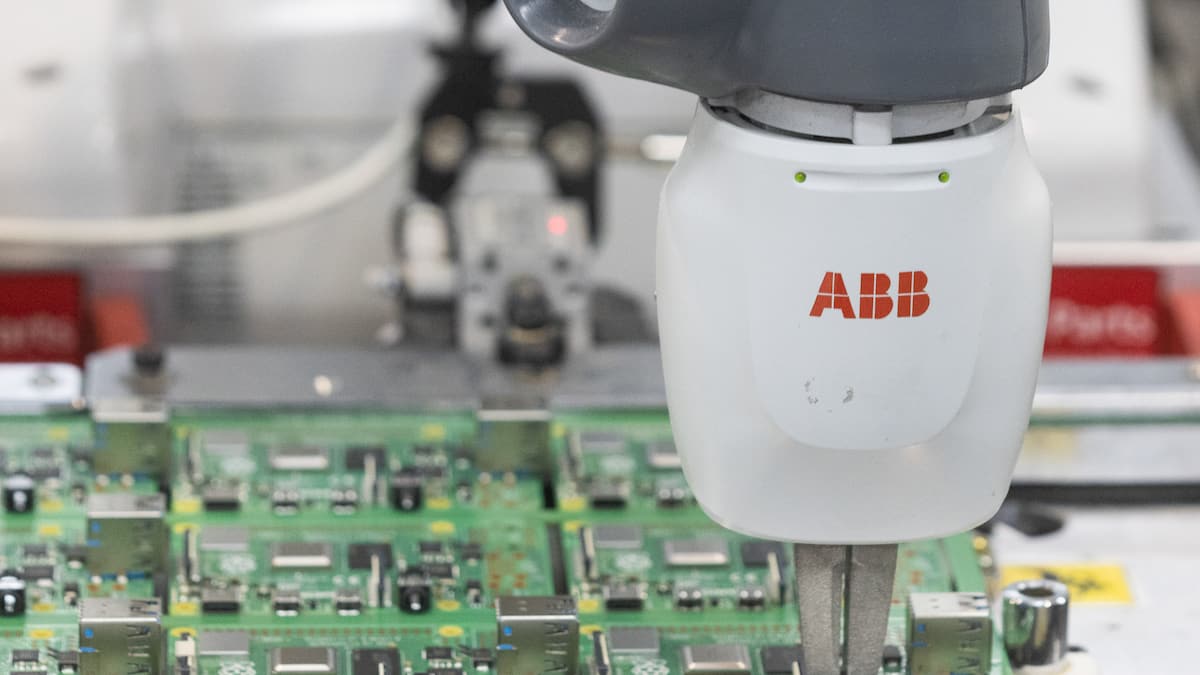
The Swiss Market Index opened 0.1% higher at 13,815.84 points on Wednesday, extending a modest recovery after Tuesday's 0.5% loss that closed the benchmark at 13,809. ABB led the gainers with a 1.5% advance at the open, while Novartis rose 0.4% and Roche added 0.6%.
Richemont opened down 1.6%, or 2.65 Swiss francs, though the decline was largely mechanical as the group began trading ex-dividend following a 4.30-franc payout. Among smaller caps, Newron Pharma jumped 3.2%, while Huber + Suhner and IVF Hartmann each climbed 2.1%. Adex Therapeutics was the day's worst performer, down 3.3%.
Traders said large intraday moves were unlikely ahead of the Federal Reserve's rate decision expected Wednesday evening after market close. Wall Street and Asian markets also signaled a cautious posture heading into the announcement.
"The market is dictating the Fed's course today," one dealer summarized. Futures implied more than a 90% probability of a 25-basis-point rate hike — the first under newly installed Fed Chair Kevin Warsh, who is expected to raise rates at Wednesday's meeting for the first time since taking the helm.
The odds were put at 92.4% by the CME Group's FedWatch tool. Several dealers noted the move would run counter to the current U.S. administration's preferences, though they stressed investors had arrived at the pricing on their own based on economic data and geopolitical factors.
A marginal tailwind came from slightly softer oil prices. Brent crude fell 0.6% to $108.14 a barrel, while U.S. WTI crude slipped 0.9% to $104.85, after Tuesday's nearly 3% advance. Traders pointed to reports that oil loading at the Saudi export port of Yanbu on the Red Sea had been suspended, though no broader de-escalation in Middle Eastern conflicts was in sight.
The yield on 10-year U.S. Treasuries dipped just below 5%, its lowest level since surpassing the psychological mark on Tuesday when it hit the highest level since 2007. Higher borrowing costs were adding pressure to heavily valued growth names and companies with significant refinancing needs, as well as U.S. sovereign finances given the elevated debt burden and persistent inflation and energy-price risks.
Asian equity markets showed mixed direction. The Nikkei 225 fell 0.1% in Tokyo and Shanghai declined 0.1%, while South Korea's benchmark gained 0.8%. U.S. indices had closed lower on Tuesday: the Dow Jones Industrials dropped 0.63% to 52,093.11, the S&P 500 fell 0.45% to 7,585.73, and the Nasdaq 100 lost 0.65% to 28,938 after AI safety concerns weighed on semiconductor names earlier in the week.
On the currency front, the Dollar Index hovered near a two-week high. The greenback gained 0.1% to 155.29 yen, edged up to 6.7106 per yuan, and strengthened to 0.8189 Swiss francs. The euro was little changed at 1.1540 dollars and 0.9450 francs.
In corporate news, Steel Dynamics rose 2% after the Chinese Iron and Steel Association called on major producers to tighten output and reduce inventories, a move traders said could ease international price pressure. In crypto-linked equities, Coinbase fell roughly 10% and Strategy shed 5.4% after the U.S. Senate blocked a broad cryptocurrency regulation bill.
Seema Shah of Principal Asset Management said market focus was shifting from whether the Fed would raise rates to the cumulative extent of tightening needed to restore price stability, noting a one-off hike alone seemed unlikely. Brock Weimer of Edward Jones cautioned that while inflation had receded sharply from its 2022 peak, he expected any further Fed tightening to be limited in scope and duration.