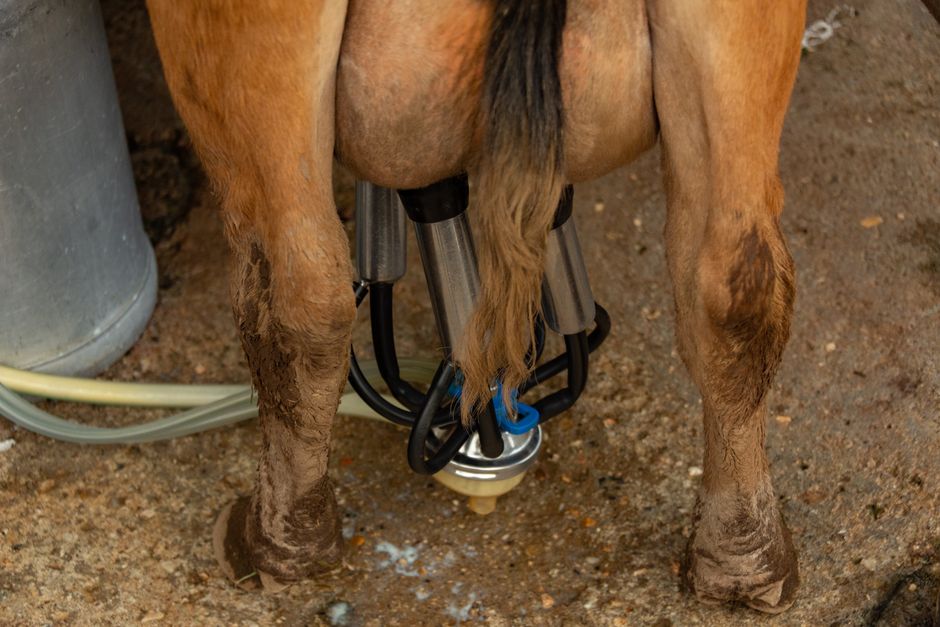
Kri-Kri Milk Industries, a Greek family-owned dairy producer, has delivered compound annual revenue growth of roughly 20% over the past decade, driven by expanding exports of authentic Greek yogurt and ice cream. The company, based in Serres, northern Greece, operates a single highly automated facility that replaced a loss from a 2013 fire with a technologically advanced rebuild, boosting margins.
The business benefits from structural advantages including proximity to 80% of Greece’s milk supply, low labor costs and minimal marketing expenditure. Its core offering—authentic Greek yogurt recognized as a protected designation of origin in key markets—commands pricing power that contrasts with competitors relying on imitation products labeled "Greek style." Kri-Kri’s yogurt often retails at about half the price of premium rival Fage while maintaining superior protein content.
Export sales now account for over 60% of total revenue, up from 18% a decade ago, with Italy and the United Kingdom as primary markets. In 2025, the UK business grew 63% and Italy 25%, supported by expansion into higher-margin niches such as children’s products, lactose-free variants and high-protein yogurts. Domestic market share stands at 14%, while the company holds just 1% of the broader European yogurt market.
Capacity constraints have emerged as demand outstrips supply. Kri-Kri plans to double production by 2027 with a €50 million investment, following a 35% year-over-year revenue increase in the first quarter of 2026 and a near-doubling of net profit. Full-year guidance anticipates roughly 19% revenue growth and a more than 40% rise in operating profit.
The company remains debt-free, financing growth through operating cash flow. Its price-to-earnings ratio of about 15 for the next 12 months reflects a valuation aligned with a business posting double-digit growth rates and preparing for further capacity expansion. Over the past 15 years, Kri-Kri’s enterprise value has more than doubled, with the stock appreciating more than twentyfold since its early years as a local dairy operation.