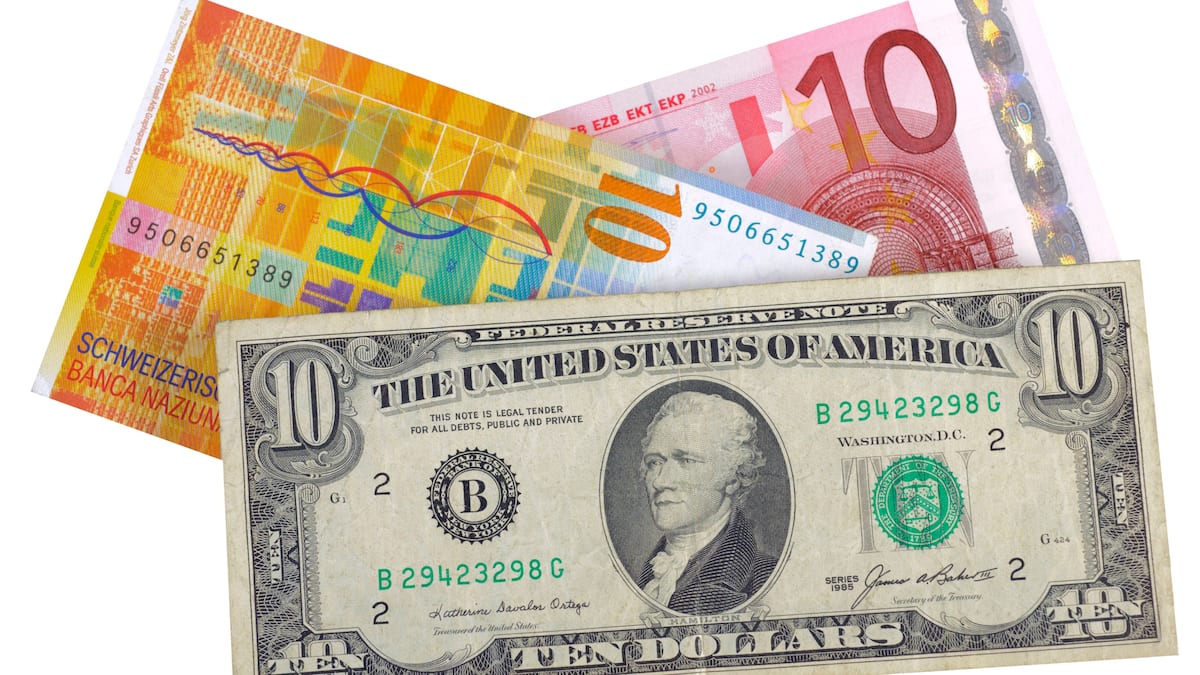
The U.S. dollar and euro have each lost roughly half their purchasing power since the turn of the millennium, according to analysis from St. Galler Kantonalbank. The Swiss franc, by contrast, has preserved about 85% of its value over the same period.
The decline reflects divergent inflation trajectories. In the U.S., inflation has repeatedly exceeded 4%, peaking at 9% in 2022, while the eurozone has also experienced sustained price pressures. Switzerland, however, has largely maintained inflation within the 0-2% range targeted by the Swiss National Bank (SNB). The last time Swiss inflation exceeded 2% was in May 2023, when it reached 2.2%, and it briefly peaked at 3.5% in August 2022.
Thomas Stucki, chief investment officer at St. Galler Kantonalbank, attributed the franc’s relative resilience to the SNB’s focus on price stability. 'The SNB appears more successful than the Federal Reserve in anchoring inflation and wage expectations,' Stucki said. The Fed and European Central Bank also target 2% long-term inflation, but both have struggled to maintain that level consistently.
Wage growth has not fully offset inflation’s impact. In the U.S., average wages have risen 3.7% annually since 2000, while Swiss wages have increased just 1.1% per year. Service sector prices in the U.S. have climbed three times faster than in Switzerland over the same period. The real value of the Turkish lira has collapsed even further, with 100 lira from 2000 now worth just 0.3 lira.
The erosion of purchasing power underscores the broader consequences of prolonged inflation. In Germany’s 1923 hyperinflation, extreme price swings saw a single U.S. dollar cost 4.2 trillion marks, and a loaf of bread reached 300 million marks. While such extremes remain rare, the steady depreciation of major currencies highlights the challenges central banks face in preserving monetary stability.