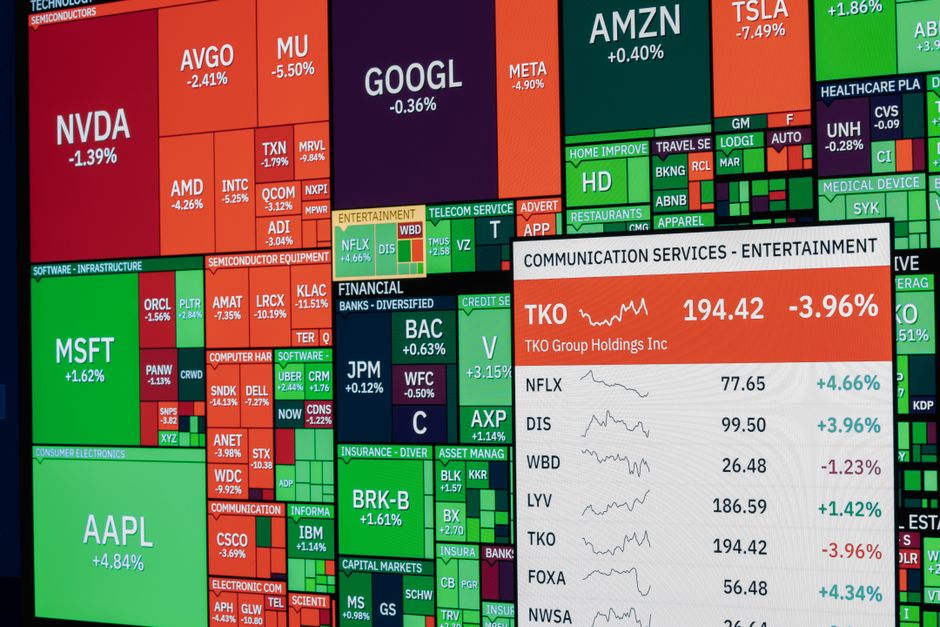
The Philadelphia Semiconductor Index has shed 18% this summer, a decline Citi attributes to inflated investor expectations colliding with a moderation in earnings momentum. Despite the pullback, the bank expects a constructive near-term shift in sentiment, pointing to upcoming presentations at its Global TMT conference and the Hot Chips conference as catalysts.
Citi's global technology, media and telecom team highlighted that the semiconductor industry's total addressable market is currently split across three segments: data-center demand, which accounts for 34% and remains robust; automotive and industrial applications, now recovering and representing 21%; and personal computers and handsets, which sit at 42% but face headwinds from memory cost inflation and supply constraints.
Looking further ahead, Citi raised its CPU market forecast to $237 billion by 2030, up sharply from $29 billion projected for 2025. That trajectory implies a compound annual growth rate of roughly 52%, a figure that exceeds the banks' own projections from AMD, Arm and Nvidia. The bank sees AMD as the primary beneficiary of what it calls a "CPU renaissance," with Intel positioned as a secondary winner.
Citi also increased its outlook for global wafer fabrication equipment spending, citing a stronger capital-expenditure model from hyperscalers. Under its base case, the bank now projects $257 billion in spending by 2028, revised up from an earlier $250 billion estimate. In a bull-case scenario, spending could approach $300 billion.
Among companies that have previously been highlighted in Citi's ProPicks AI picks, Super Micro Computer has gained 185% and AppLovin 157%, according to the bank's notes.