At a recent "Robot Olympics" in Beijing, humanoid robots demonstrated dancing, jumping, boxing and one broke the 100‑metre sprint record previously held by Usain Bolt. In the event’s aftermath, the People’s Liberation Army (PLA) used its official newspaper, PLA Daily, to urge researchers to speed up the development of combat‑capable robots.
Reuters analysis of dozens of Chinese government documents, scientific studies and patent filings confirms that the PLA is actively pursuing humanoid platforms for military use. The armed forces are conducting tests under simulated combat conditions to evaluate how such machines could operate alongside human troops. Current assessments indicate the robots remain too unreliable and power‑hungry for integration into regular units.
The Chinese Ministry of Defense and the National University of Defense Technology (NUDT), the PLA’s primary research institute, have not responded to requests for comment.
Internationally, the Ukraine conflict has highlighted the growing role of artificial intelligence and semi‑autonomous weapons, prompting other nations to intensify their own robotic programmes. The U.S. Army recently issued a competition to develop "military humanoid capabilities," outlining potential tasks such as reconnaissance, security, obstacle clearance, chemical‑biological‑radiological‑nuclear handling, and urban attack or defence. The U.S. Department of Defense declined to comment on the initiative.
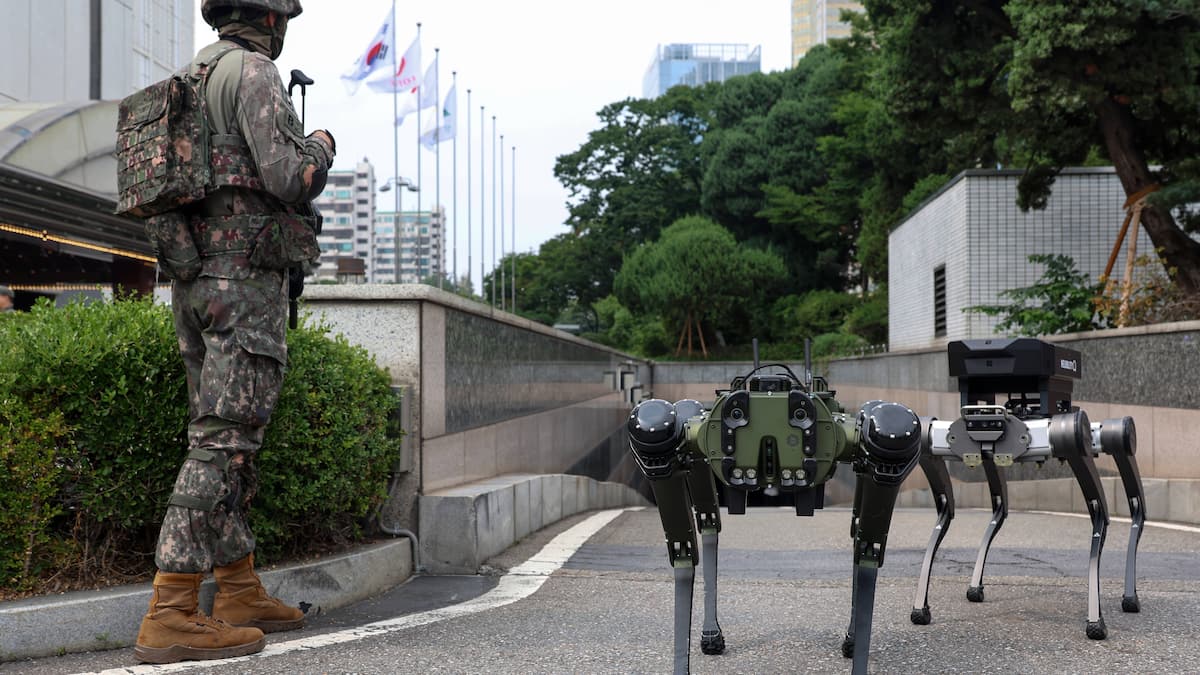
The PLA envisions urban warfare as a key application, planning for two‑ and four‑legged robots and unmanned ground vehicles to clear enemy‑occupied buildings in coordination with soldiers. A study released by NUDT about a year ago projected a five‑ to ten‑year timeline for such capabilities. Details on weapon systems or rules of engagement with civilians were not provided.
A PLA Daily commentary described a scenario where armed robots would fire on targets only after a human operator authorises the engagement. The army also released an AI‑generated video showing Taiwanese troops being overrun by two‑ and four‑legged robots, reflecting Beijing’s claim over the island.
State arms manufacturer Norinco has already listed a humanoid robot named "Fuxi" in its portfolio, marketed for hazardous tasks, reconnaissance and guard duties, and operable via remote control.
Experts caution that fully autonomous humanoid combat robots are still years away. International humanitarian law requires combatants to distinguish between fighters and civilians and prohibits attacks on wounded or surrendering personnel. No binding global treaty currently governs lethal autonomous weapons, and religious leaders, including the Pope, have called for strict limits on their military use.