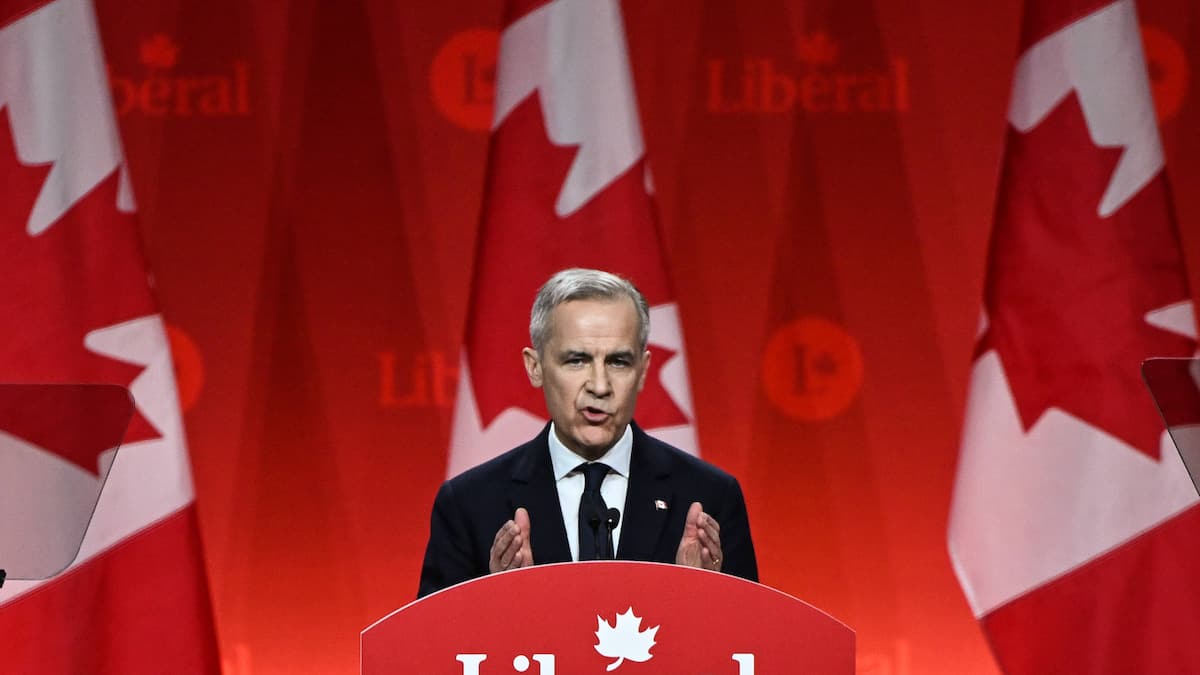
Canada is examining the possibility of an associated membership with the European Union, a move driven by deteriorating trade and political relations with the United States, according to the Wall Street Journal.
Prime Minister Mark Carney is exploring the option, the newspaper reported on Sunday, citing EU and Canadian officials. The EU, which has historically shown little flexibility on its accession rules, is now reportedly open to creating a new associated-status arrangement, the report said.
Neither the Canadian embassy in Brussels nor the EU Commission immediately commented on the report.
The EU already maintains association agreements offering closer political and economic cooperation without full membership with several countries, including Ukraine, Georgia and Israel.
The strategic shift is rooted in the escalating trade dispute with the United States. The US has imposed tariffs on billions of dollars in Canadian goods, and Canada has responded with reciprocal duties. Relations between Ottawa and Washington have deteriorated significantly since US President Donald Trump returned to the White House in early 2025, with disagreements extending beyond trade into other areas.
Under the proposed framework, Canada and the EU would discuss facilitating the free movement of goods, services and workers across sectors including energy, artificial intelligence, defence and critical minerals — effectively extending the EU’s external border to include Canada, the WSJ reported.
Discussions are also underway on relocating undersea cables, co-building data centres and cloud-storage facilities, launching satellite networks, and constructing infrastructure for Canadian energy exports to the EU.
Carney has also held regular conversations with multiple EU leaders about allowing Canadians visa-free residence and work rights in the EU, the report said, citing two people familiar with the matter. The exchange with French President Emmanuel Macron was described as particularly intensive, with the two expected to meet at the end of the month. Macron’s office did not immediately respond to a request for comment.
Analysts note the initiative faces substantial hurdles. The EU-Canada comprehensive economic and trade agreement, concluded more than a decade ago, remains partially ratified — nine years after its provisional entry into force, several member states have still not approved the deal.