





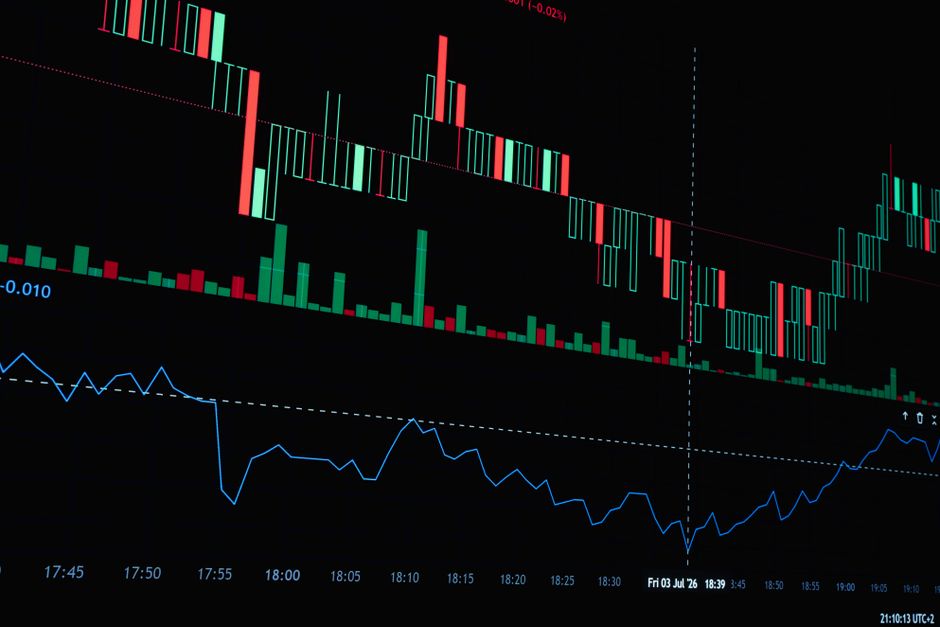
I’ve been watching the CFD market for years, and the latest buzz – AI‑driven pricing engines – feels like a double‑edged sword. On the one hand, brokers tout sub‑millisecond spread calculations that promise tighter quotes and lower costs. On the other, the very algorithms that generate those numbers are a black box for the retail client who must trust them blindly.
What’s really happening is that many brokers have integrated proprietary machine‑learning models into their order‑routing and pricing stacks. These models ingest order flow, market depth, news sentiment and even competitor pricing to output a dynamic spread for each instrument, often changing dozens of times per second. The promise is clear: more efficient price discovery, especially in thinly‑traded indices or exotic commodities where traditional market makers are scarce.
From a technical standpoint, the benefits are undeniable. Faster recalibration can narrow the bid‑ask gap during calm periods, and adaptive algorithms can withdraw liquidity when volatility spikes, protecting the broker’s balance sheet. For a trader who simply wants a clean quote on the EUR‑USD CFD, the experience can feel smoother than ever before.
The flip side, however, is the opacity that comes with proprietary AI. Unlike a traditional market maker whose quote formation can be audited against order‑book data, an AI model’s internal weighting is rarely disclosed. This means a broker could, intentionally or not, bias spreads against certain client segments, or amplify price movements to trigger stop‑loss orders. The lack of a transparent audit trail makes it difficult for regulators or traders to verify whether the spreads truly reflect underlying market risk.
Execution risk also morphs in this environment. When spreads are recalculated in microseconds, the quoted price at the moment of click may already be stale by the time the order reaches the exchange. In practice, this can manifest as hidden slippage that is harder to attribute to latency and more likely to be blamed on “market volatility.” The AI engine may even adjust spreads pre‑emptively based on predictive volatility models, effectively widening the cost for traders before the market moves.
Regulators have started to notice, but the current framework still treats CFD pricing as a broker‑level issue rather than a systemic risk. ESMA’s recent leverage caps, for instance, did not address algorithmic pricing. Without clear guidance on model governance, validation and disclosure, we risk a new layer of asymmetry where sophisticated brokers wield AI as a competitive moat, leaving retail participants in the dark.
So what can a retail trader do? First, demand more transparency: brokers should publish the frequency of spread updates and provide post‑trade analytics that show the quoted versus executed price. Second, diversify across platforms that offer static spread products alongside AI‑driven ones, giving a benchmark for comparison. Finally, stay vigilant during high‑impact news events when AI models are most likely to adjust spreads aggressively.
In the end, AI‑powered pricing is neither a panacea nor a disaster. It offers genuine efficiency gains, but only if the industry embraces robust model governance and opens the black box to scrutiny. Otherwise, we risk swapping one hidden cost – the spread – for another, far less visible one: algorithmic opacity.





