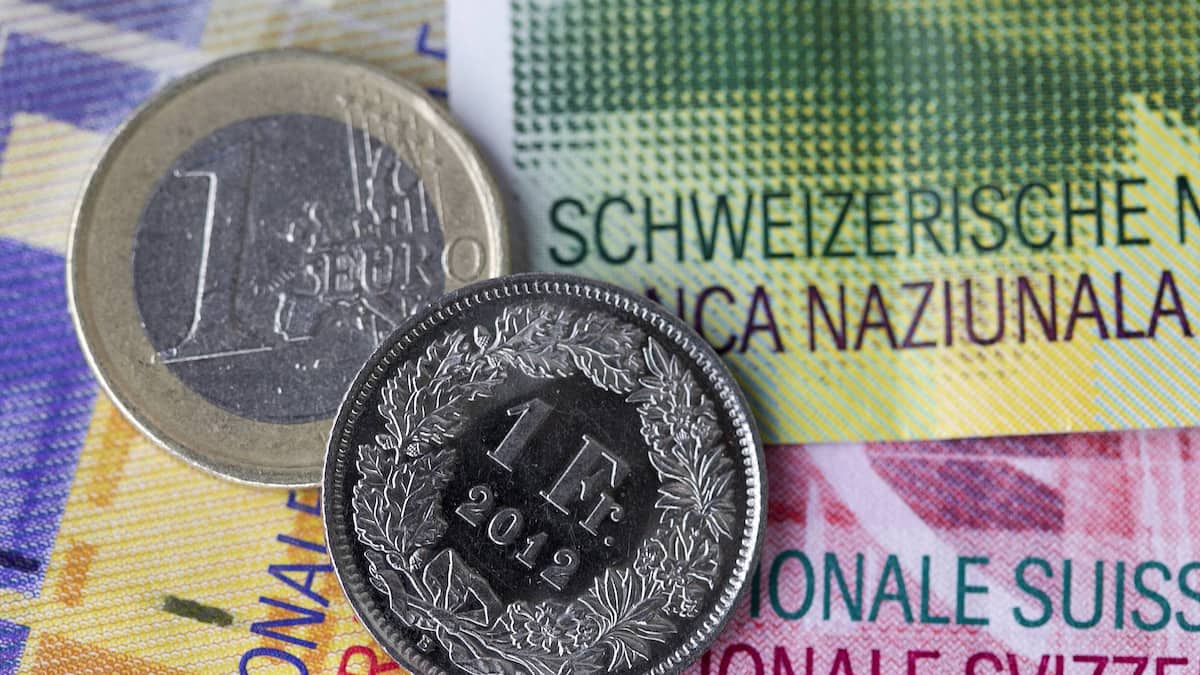
The Swiss franc weakened to 0.9445 per euro on Thursday afternoon, the lowest closing-price level since March 31, 2025, extending its decline following the European Central Bank's rate increase.
The franc had traded at 0.90 per euro roughly six months ago, making the year-to-date loss against the euro stand at about 1.3%. Against the US dollar, the franc fell to 0.8146 on Thursday afternoon.
The ECB raised its key interest rate by a quarter percentage point on Thursday to 2.50%, the highest level in approximately a year and a half. The rate last stood higher at 2.75% in February 2025.
The move widens the interest-rate differential with Switzerland, where the Swiss National Bank's key rate has been at 0% since June 2025. A higher rate environment in the euro area can make the euro more attractive to investors and push the European currency higher.
The ECB's inflation outlook also points to sustained higher rates. The central bank expects eurozone inflation to remain elevated through at least 2027, projecting 3% for the current year—well above its 2% medium-term target.
In Switzerland, economists judge that a rate hike at the SNB's September 24 monetary-policy meeting is unlikely, even though annual inflation doubled from 0.4% to 0.8% in July. Hiking may only be considered in December 2026 or March 2027, they said. The path of the franc remains a key factor: continued weakening against the euro could feed into higher domestic inflation and potentially compel the SNB to raise rates.