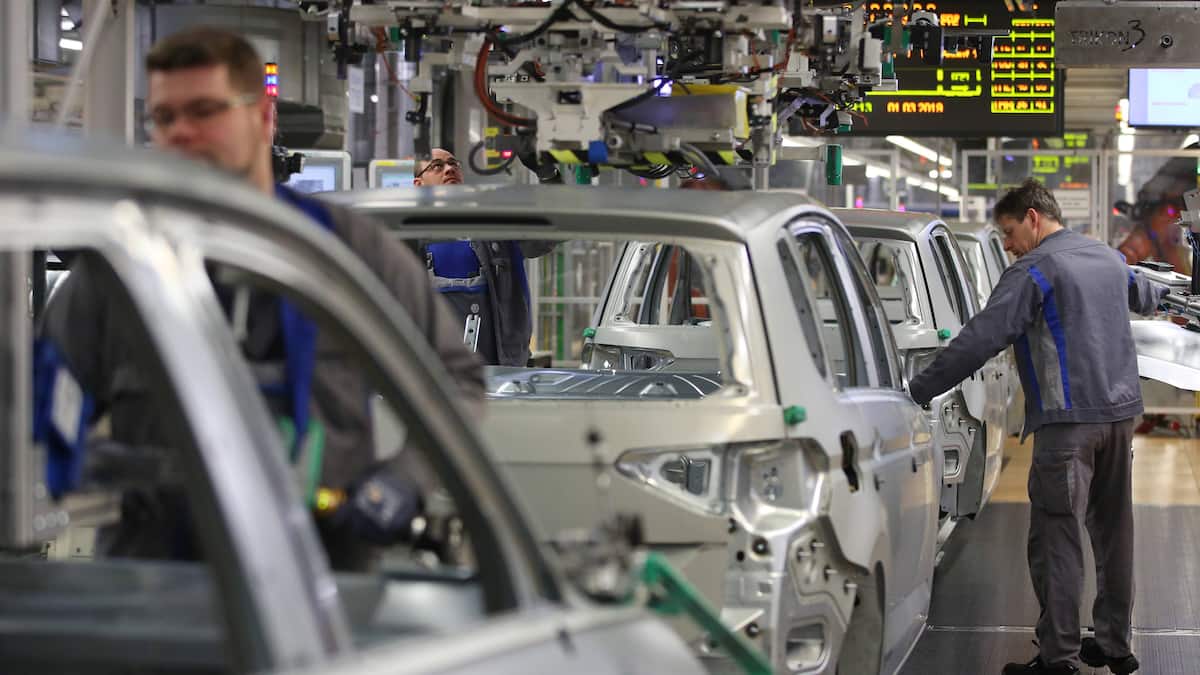
Germany's largest industrial union IG Metall is organizing nationwide protests on Monday by workers at carmakers and suppliers, responding to a deepening crisis in the domestic automotive sector marked by overcapacity, thousands of job cuts and intensifying competition from China.
More than 280 actions are planned at over 200 locations across all German states, including Wolfsburg, Zwickau, Stuttgart, Saarbrücken and the Ruhr region. The demonstrations will feature internal company meetings, organized midday breaks, star marches and public rallies. IG Metall expects participation from more than 100,000 workers.
The campaign carries the slogan "Zukunft statt Kahlschlag — Zusammenhalt ist unsere stärkste Marke," translating to "Future instead of slash-and-burn — Solidarity is our strongest brand."
Union leader Christiane Benner described the situation as an "unprecedented attack on workers" in the automotive industry, warning that employees are bearing disproportionate consequences of the sector's troubles. Both carmakers and suppliers have already eliminated thousands of jobs in Germany, and IG Metall fears further cuts unless demands are met.
Central to the union's platform is a refusal to touch the 35-hour work week, a cornerstone of German industrial labor agreements that is increasingly being questioned by struggling manufacturers seeking cost relief. "Leave the 35-hour week alone," Benner said.
Beyond labor protections, IG Metall is demanding that companies redirect investment toward German sites, particularly in battery production, autonomous driving and modernized manufacturing facilities. The union also called for higher-volume vehicle models to improve factory utilization rates.
The broader policy agenda includes pressure on politicians to deliver lower electricity costs and reduced bureaucracy, an expansion of tariffs on vehicles imported from China, and financial support for suppliers undergoing structural transformation. The union's rallying cry frames the demand simply: "Investments in sites, not windfalls for shareholders."