





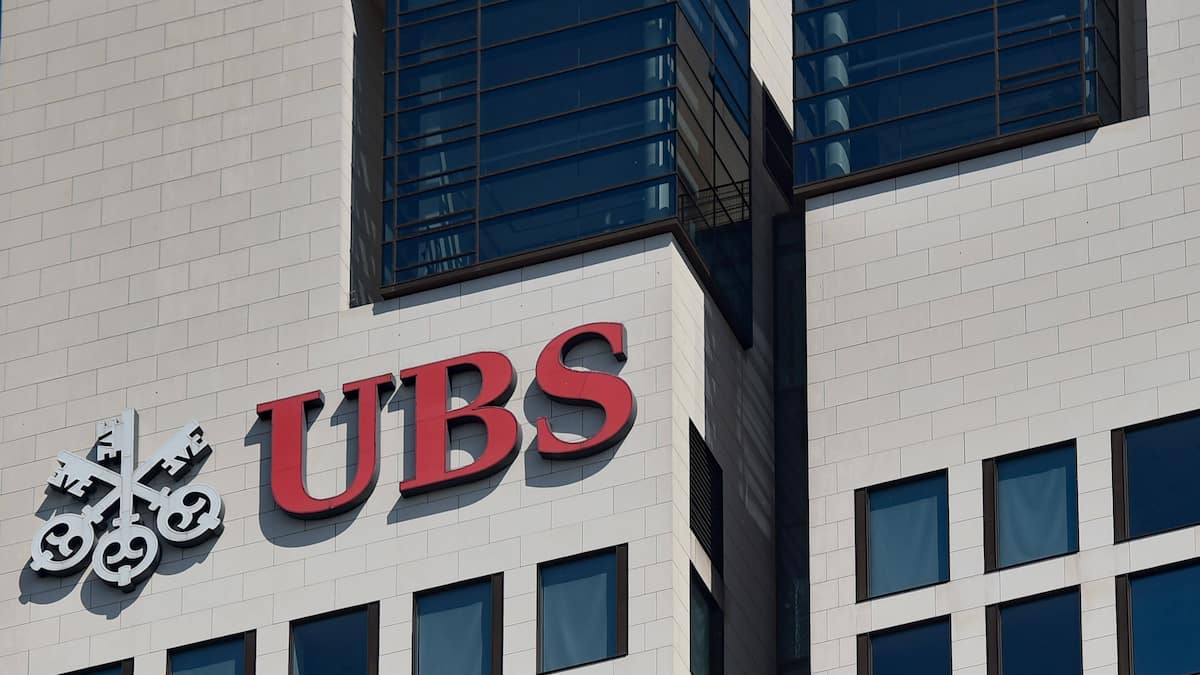
Shares of UBS fell 0.5 percent to 41.53 Swiss francs an hour into Thursday's trading, extending a drawdown of 7.2 percent from a multi-year high of 45 francs reached roughly a week ago, even as the wider SMI index edged up 0.3 percent.
The decline followed a weak session for UBS on Wednesday, when the stock slipped 0.2 percent, and was compounded by fresh gloom from across the Atlantic. Goldman Sachs CEO David Solomon told a Barclays-hosted conference that fixed-income trading revenue had weakened compared with recent quarters and that costs were rising across the business. He said equity trading remained "very strong" but cautioned that higher transaction volumes would keep expense levels elevated. Goldman Sachs shares fell 3.9 percent on Wall Street.
In Switzerland, attention also turned to the Ständerat, the upper house of parliament, which was set to vote Thursday on a motion that could shift the course of a dispute over stricter bank capital requirements. Andrea Caroni, an FDP representative in the Ständerat, said she expected a majority of her party's members to support returning the proposal to the Federal Council rather than pursuing tougher rules through legislation.
The federal government has taken a hard line, with Finance Minister Karin Keller-Sutter demanding that UBS hold 100 percent hard core CET1 capital at its foreign subsidiaries — a requirement economists say would be significantly costlier for the bank than the alternative. An economic and taxation commission in the smaller chamber had endorsed a milder counter-proposal in late August, calling for UBS to fund those subsidiaries with 50 percent CET1 capital and 50 percent AT1 bonds.
Caroni said the Federal Council was the proper venue for deciding capital requirements, noting that the existing Banking Act already addresses the matter. She told Reuters she was "hopeful" the motion would pass. The FDP holds 12 of 46 seats in the Ständerat; the largest faction, Mitte, holds 15. Mitte's Fabio Regazzi said Caroni's proposal lacked a clear majority outlook but described the situation as "fluid," with various outcomes still possible.





