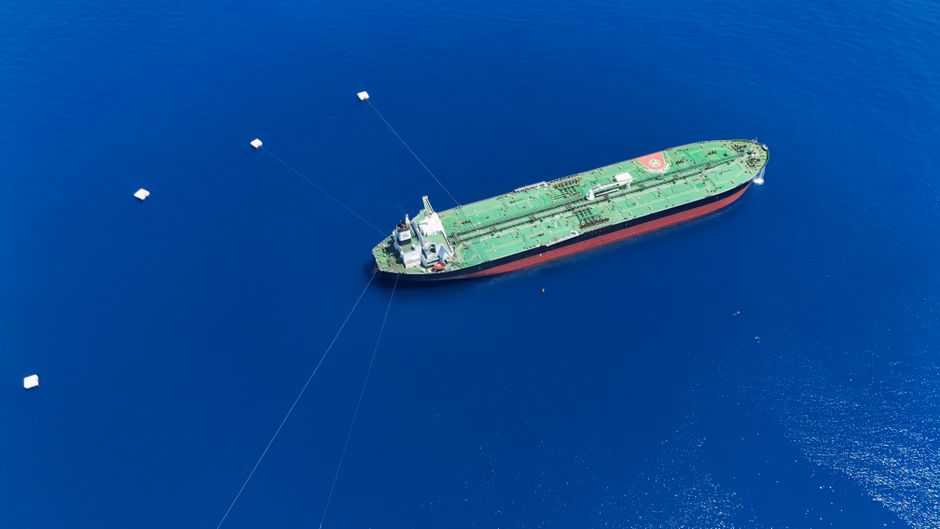
Tanker traffic through the Strait of Hormuz has become increasingly erratic as vessels alter course or halt movement amid heightened security risks and Iran’s tightening control over the critical chokepoint.
Vessel-tracking data indicates the Amara fuel tanker entered the Persian Gulf empty on Monday before executing multiple U-turns. The vessel is currently stationary in the northern sector of the Strait of Hormuz, within lanes where Iran has approved transit, according to Bloomberg-compiled tracking.
On Monday, Iran’s Fars news agency reported the detention of a tanker owned by a UAE-based company near Qeshm Island in the Strait of Hormuz. The vessel’s identity remains undisclosed, and neither Iran nor the United Arab Emirates has issued an official statement regarding the incident.
Security conditions deteriorated further early Tuesday local time when a cargo ship was struck by an unknown projectile during an outbound transit of the Strait of Hormuz. The United Kingdom Maritime Trade Operations (UKMTO) confirmed the incident in a warning notice, stating that the projectile damaged the engine room and resulted in a crew casualty. The remaining crew are receiving assistance from the Omani Coast Guard, with no environmental impact reported.
The escalation follows recent declarations by Iran and the U.S. that have diminished prospects for Middle East de-escalation, contributing to upward pressure on crude oil prices. Brent crude futures rose above $91 per barrel in Asian trade, while West Texas Intermediate (WTI) climbed above $85 per barrel on Tuesday.