





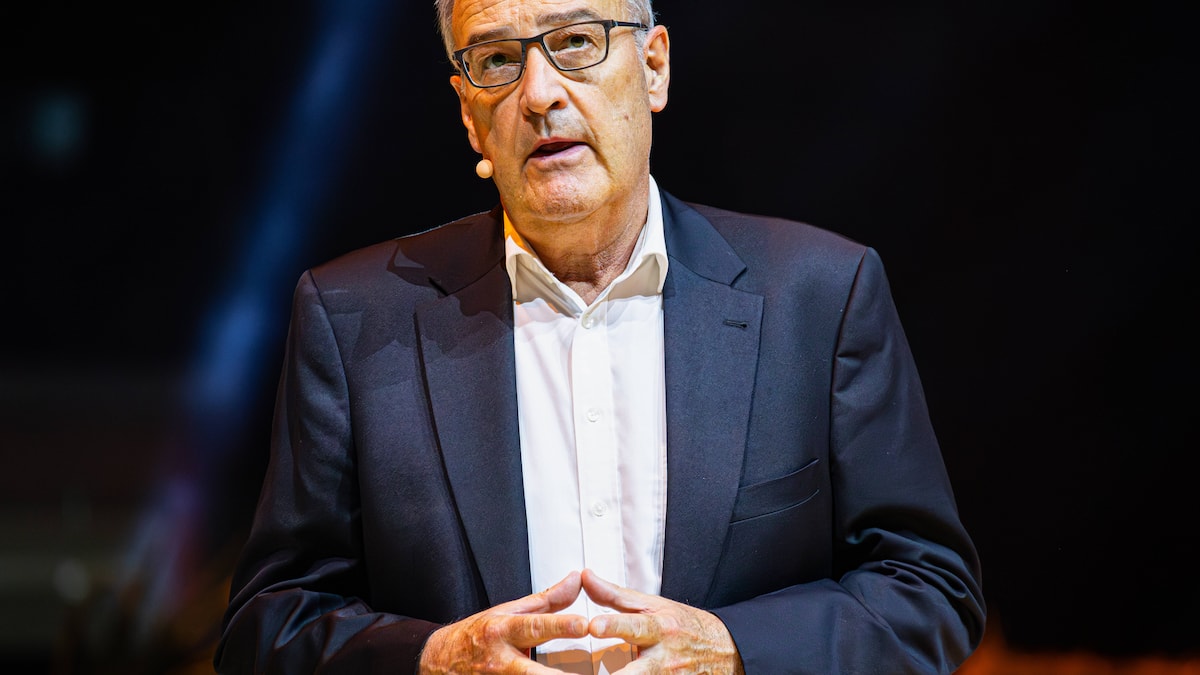
Swiss Federal President Guy Parmelin addressed the 81st UN General Assembly in New York on Tuesday evening, calling on world leaders to demonstrate that cooperation remains possible in an era of escalating geopolitical tension.
Parmelin drew on Switzerland's own experience as a mountainous country to illustrate how natural divides can become points of connection. "A natural border can also become a place of encounter," he said. "From experience we know that dialogue is not a sign of weakness."
He argued that collaboration does not require nations to surrender their values or adopt a single model. Useful cooperation, he said, builds partnerships, facilitates knowledge exchange, and empowers independent action. "It is not about doing something for others, but acting together," Parmelin said.
The Swiss president framed the world as being at a turning point. He said the most fundamental principles of the UN Charter — the prohibition on force, respect for sovereignty and territorial integrity — are being openly violated. Parmelin urged a return to multilateralism, posing the question of whether interstate relations will continue to rest on shared rules or become increasingly determined by the influence and power of individual states.
The erosion of trust between nations extends beyond peace and security, Parmelin warned, also affecting the global economy. "Protectionism is increasing," he said. Supply chains built over decades of interdependence are being reorganized or are fragmenting under the pressure of geopolitical tensions, he added. Economic resilience, he argued, arises where relationships are broadly anchored, new partnerships are forged, and exchange between world regions remains as open as possible.
Parmelin highlighted Geneva as a venue for neutral dialogue, saying Switzerland as host state ensures the city remains open, accessible and inclusive for large and small states alike, across the Global North and South. He pointed to the upcoming AI summit scheduled for June 21 and 22, 2027, under the theme "Bridging Innovation and Trust." Artificial intelligence, he said, demonstrates that some transformations are so profound and rapid that no single state can manage their consequences alone — calling for institutions capable of addressing cross-border challenges.





