





Crude oil prices fell on Tuesday after reports that Iran and Oman were discussing a joint temporary navigational corridor to clear mines in the Strait of Hormuz, easing concerns over supply disruptions.
Brent crude was last trading at $86.69 per barrel, while U.S. West Texas Intermediate (WTI) stood at $80.61 per barrel. The decline came despite the latest U.S. sanctions targeting Iran’s oil trade, which traders largely dismissed as already priced in.
ING commodity strategists Warren Patterson and Ewa Manthey noted that a reported breakthrough in Pakistan-mediated peace talks had also contributed to the downward pressure on oil markets. However, they cautioned that even a potential agreement between Iran and Oman would not immediately restore normal oil flows through the critical chokepoint.
"Any agreement between these two parties does not mean we will see normalization in oil flows through the key chokepoint," the analysts wrote. "We would likely need to see the U.S. lift its blockade on Iranian ports and ease sanctions on Iran before we see any move towards normalization."
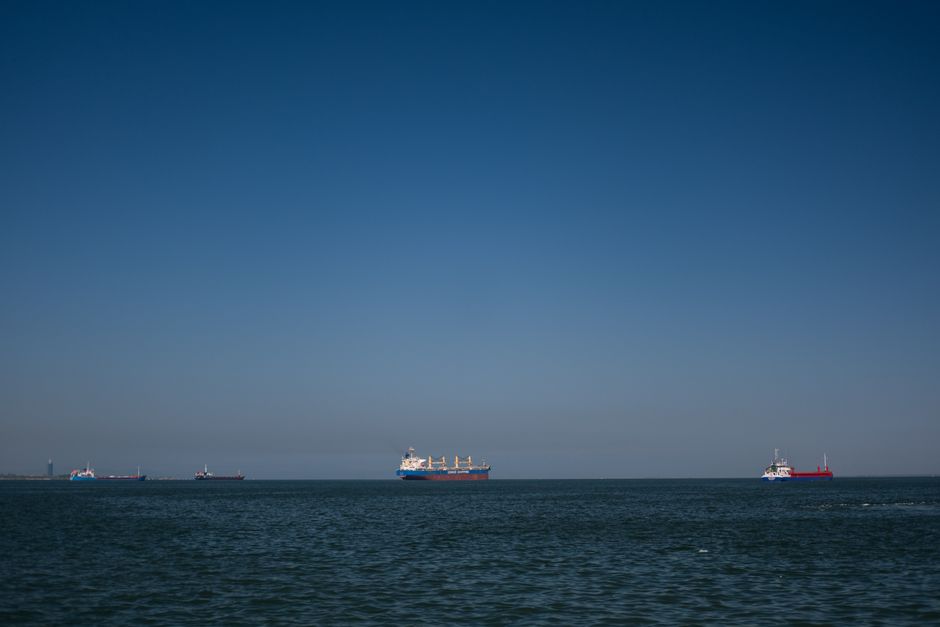
Tanker tracking data from Windward showed minimal activity in the Strait of Hormuz on Tuesday, with only one vessel—a Barbados-flagged LPG carrier—entering the strait. No outbound tanker traffic was recorded over the 24-hour period, and the vessel operated in dark mode, according to the data.
The U.S. has previously estimated that 8-9 million barrels per day of oil transit the Strait of Hormuz, though ING analysts questioned the longer-term feasibility of that figure. "Over a longer time frame, this number seems aggressive," they wrote, citing alternative estimates ranging from 2 million to 6 million barrels per day.






