





Nvidia shares are trading at less than 17 times expected earnings over the next 12 months, the cheapest valuation in more than a decade, according to Bloomberg data. The multiple sits at roughly half its 2025 level, even as growth has accelerated. In May, the stock's price-to-earnings ratio stood above 25.
The wide gap between fundamentals and valuation has drawn attention from investors. "The stock has lost significant value. It shows healthy skepticism in the market," said Eli Horton, senior portfolio manager at TCW. "Many investors doubt whether current profitability is sustainable." The stock posted a six-day winning streak through Tuesday, rising as much as 1.1%, aided by a broader semiconductor rally.
Investor nerves were shaken earlier this month after leading AI companies called for a slower pace of development of advanced AI models. The Philadelphia Stock Exchange Semiconductor Index (SOX) plummeted nearly 6% on September 14. It rebounded 4.3% on Monday, its best day since August 4, partly on optimism sparked by Meta Platforms' early successes with its new AI agent. By 13:40 New York time on Tuesday, the SOX was up 1.3%.
Concerns about AI hardware spending persist, driven by criticism of new data-center construction and rising interest rates. However, there are no clear signs of a slowdown in infrastructure investment.
Nvidia projects revenue and net profit growth of 90% and 99% respectively for fiscal year 2027, up from 65% growth in each category the prior year. In its second-quarter report, the company guided for 70% revenue growth in fiscal 2028, well above the 45% previously expected. Nvidia is up 23% year to date, the second-best return among the Magnificent Seven tech giants after Apple's 26%. But compared with peers in the semiconductor space, the gain is modest: the SOX has climbed 78% this year, while Micron Technology, Intel and AMD each surged more than 180%. Nvidia is among the index's five worst-performing stocks, while the SOX itself trades at 21 times estimated earnings.
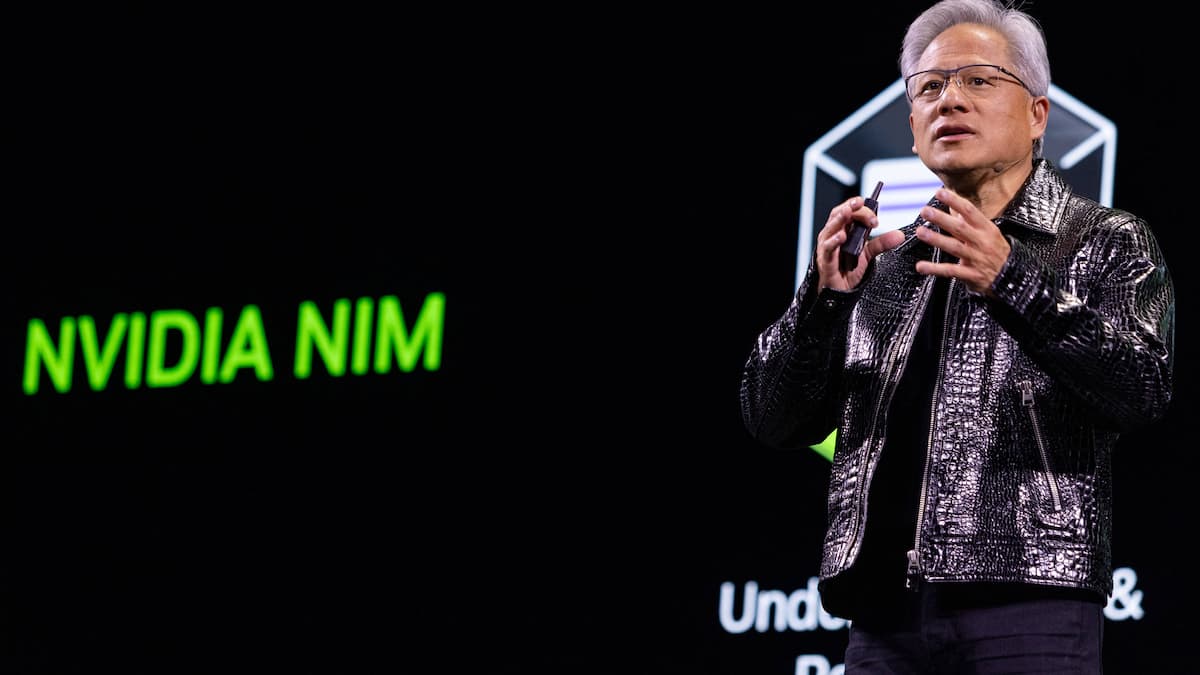
CEO Jensen Huang has pushed back against the undervaluation. At a Goldman Sachs technology conference earlier this month, he called Nvidia the "first and only growth-value stock in the world" and said the company is "incredibly misunderstood." "We are not only growing but also gaining market share," Huang said.
Margin pressure is a key concern. Rising costs for key components such as memory chips have weighed on profitability. Nvidia's gross margin stood at 75% in the second quarter, but Bloomberg analyst estimates suggest it could fall below 72% in the fourth quarter before recovering in subsequent quarters.
David Russell, global head of market strategy at TradeStation, said intensifying competition is likely to keep margins under pressure. Several of Nvidia's largest customers are developing their own AI chips: Meta Platforms recently highlighted its custom silicon, and Alphabet has built a substantial business around its own designs. "Companies want to reduce their dependence on Nvidia, so it's quite possible that Nvidia's market position will weaken over time," Russell said. "That means gross margins are more likely to fall than rise. That's a big problem for investors."
Nvidia's revenue grew from approximately $27 billion in the fiscal year ending January 2023 to an estimated $410 billion in the current fiscal year 2027. The stock's more than 1,600% gain over four years made it the world's most valuable company.
Horton noted that while it is reasonable to pause and assess whether AI spending will hold, neither a cut in hyperscaler outlays nor restrictive regulation appears likely. "The current valuation level is a very attractive entry point," he said.
Category: equities





