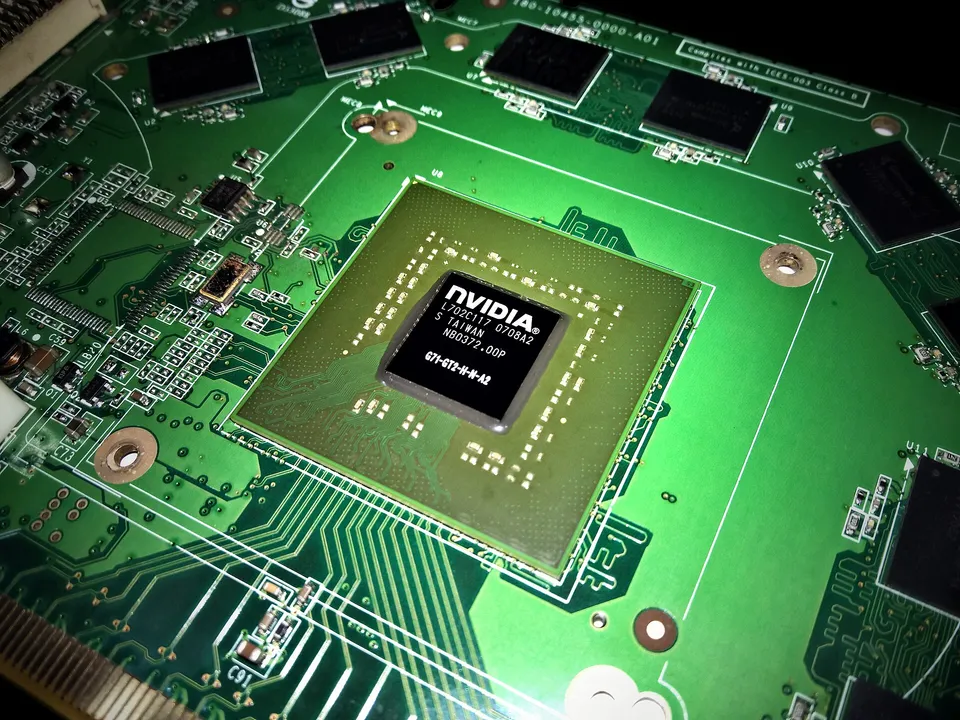
Nvidia’s after-hours surge of 5% on Wednesday followed another quarter of revenue and earnings that exceeded already elevated Wall Street expectations. The chipmaker reported second-quarter fiscal 2027 revenue of $96.2 billion, up 106% year-over-year and ahead of the $92.2 billion consensus. Adjusted earnings per share reached $2.22, also topping forecasts.
Swiss semiconductor suppliers Comet (+2.1% to 352.00 francs), Inficon (+1.4% to 171.80 francs) and VAT Group (+1.5% to 617.40 francs) posted modest gains by Thursday noon, reflecting a tempered market response. Early trading in Asia showed subdued reactions among chip-related equities, while U.S. stock futures trimmed gains as the initial boost from Nvidia’s outlook faded. The Nasdaq 100 future rose 1.2% in early Asian trade but eased to a 0.6% gain during European hours.
Volatility across global semiconductor equities has declined over the past three weeks, as evidenced by the iShares Semiconductor ETF’s implied volatility, which fell to 40% within a month—well below its five-year average of 52%. Comet’s share price illustrates this trend: after rallying from a March low of 227 francs to a peak near 437 francs in early June, the stock has since consolidated within a ±12% band since late June.
Analyst coverage remains constructive for the three Swiss suppliers. Comet is rated ‘Buy’ by seven analysts, ‘Hold’ by three and ‘Sell’ by one, with an average price target of 460 francs. Inficon carries six ‘Buy’ and four ‘Hold’ ratings with no ‘Sell’ recommendations, targeting an average of 188 francs. VAT Group has eight ‘Buy’ and eight ‘Hold’ ratings, alongside one ‘Sell’, with a consensus target of 708 francs, implying 22% upside from its current level. Citigroup, in a bullish stance, sets VAT’s price target at 850 francs, citing robust demand for advanced logic and high-bandwidth memory capacity, full order books and resilient China sales.
Analyst Pavan Daswani of Citigroup raised his VAT forecasts in late July after observing stronger-than-expected demand across end markets and sustained order visibility. The China market, in particular, continues to show robust demand, according to Daswani.
Despite Nvidia’s exceptional growth and the improving outlook for AI-driven semiconductor demand, mid-term risks persist. Serge Nussbaumer, capital markets expert at Maverix, highlights Nvidia’s gross margin trajectory as a key concern: the company expects a Q3 gross margin of around 74%, potentially easing to 71%-72% in Q4 due to rising memory and component costs. While still historically high, the projected decline coincides with reports that Nvidia has notified customers of over 15% price increases on certain AI server systems, with further hikes anticipated at the start of the next fiscal year.
These dynamics suggest two near-term implications for Swiss suppliers. First, demand for their high-precision components is likely to remain robust. Second, the extent to which Nvidia’s pricing power pressures its suppliers’ own pricing leverage remains an open question over the coming months. The broader AI chip ecosystem is also facing intensifying price competition at the model level, with free offerings such as Ox Alpha and multiple price cuts by OpenAI underscoring a rapid commoditization trend in AI services.