





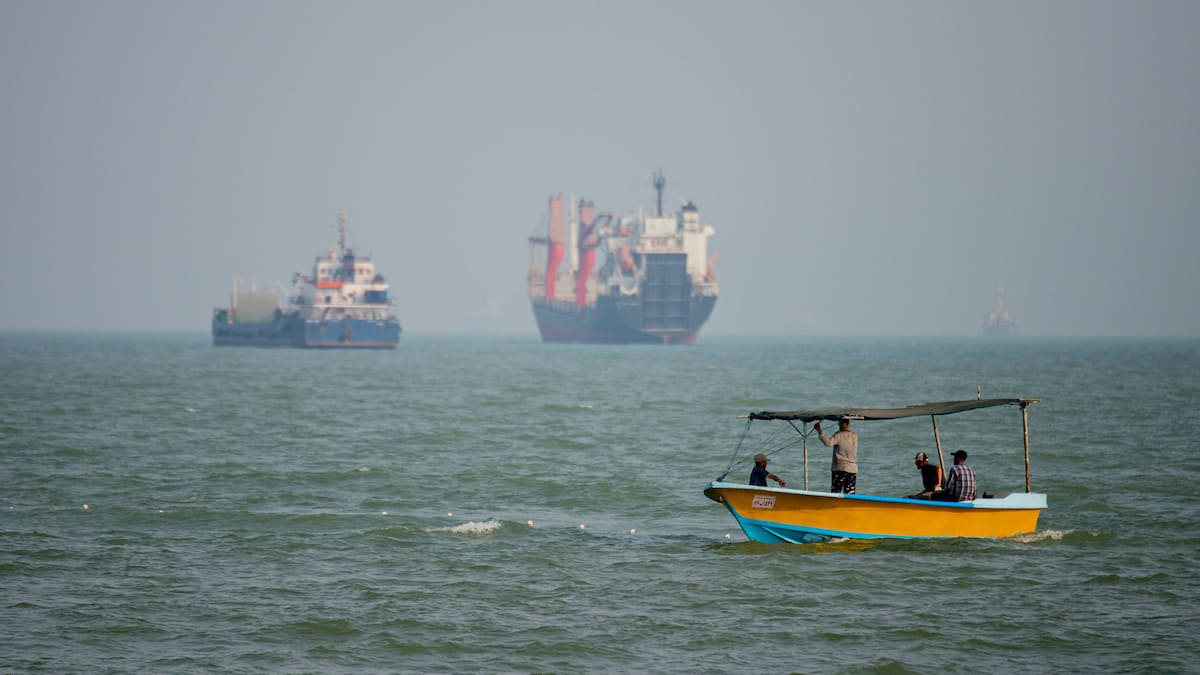
The ongoing conflict between the U.S., Israel and Iran continues to strain global energy markets, with the Strait of Hormuz—a critical chokepoint for oil transit—remaining a focal point of disruption. Despite U.S. President Donald Trump’s pledge to escalate economic pressure on Tehran through a "D-Day"-style campaign, including sanctions aimed at isolating Iran from allies such as China, tangible progress toward de-escalation remains elusive.
Negotiations to end the conflict have not materialized, as Trump confirmed this week, further delaying prospects for a lasting peace or the reopening of the Strait of Hormuz. While the U.S. administration asserts the waterway remains operational, shipping volumes through the strait have consistently fallen short of pre-war levels. Unlike Saudi Arabia or the United Arab Emirates, most Gulf exporters lack viable alternatives for rerouting oil shipments, leaving roughly a quarter of global seaborne crude exports vulnerable to disruption.
Brent crude prices have climbed steadily since early August, reaching approximately $94 per barrel—a level roughly $20 higher than pre-war prices. The rally reflects sustained geopolitical risk premiums, even as market analysts note that broader economic buffers are mitigating some of the impact. Strategic petroleum reserve releases by major consumers, including China and the U.S., have temporarily dampened demand on the global market. China’s crude imports, for instance, have fallen to levels last seen in 2016, a reduction that analysts argue has had a more significant effect than the IEA’s coordinated stock releases.
However, economists caution that Brent prices may not fully capture the strain on energy markets. Thomas Puls, an economist at Germany’s Institute of the German Economy (IW), highlights a structural imbalance: refining capacity shortages are now a more pressing constraint than crude availability. Puls points to diesel and gasoline prices as clearer indicators of market stress. European diesel futures have traded above €1 per liter for five consecutive sessions—a threshold last breached in 2022 following Russia’s invasion of Ukraine—signaling that refiners are struggling to meet demand despite ample crude supplies.
In Switzerland, retail fuel prices have also risen in tandem with global trends. Unleaded 95 gasoline averaged over 2.00 francs per liter for the first time in nearly four years, while diesel climbed five centimes to 2.27 francs per liter, according to the Touring Club Switzerland (TCS). Though these levels remain below the 2022 peaks—when gasoline peaked at 2.31 francs and diesel at 2.40 francs—the TCS expects prices to stay elevated in the near term due to persistent geopolitical risks, constrained refining capacity and logistical bottlenecks.





