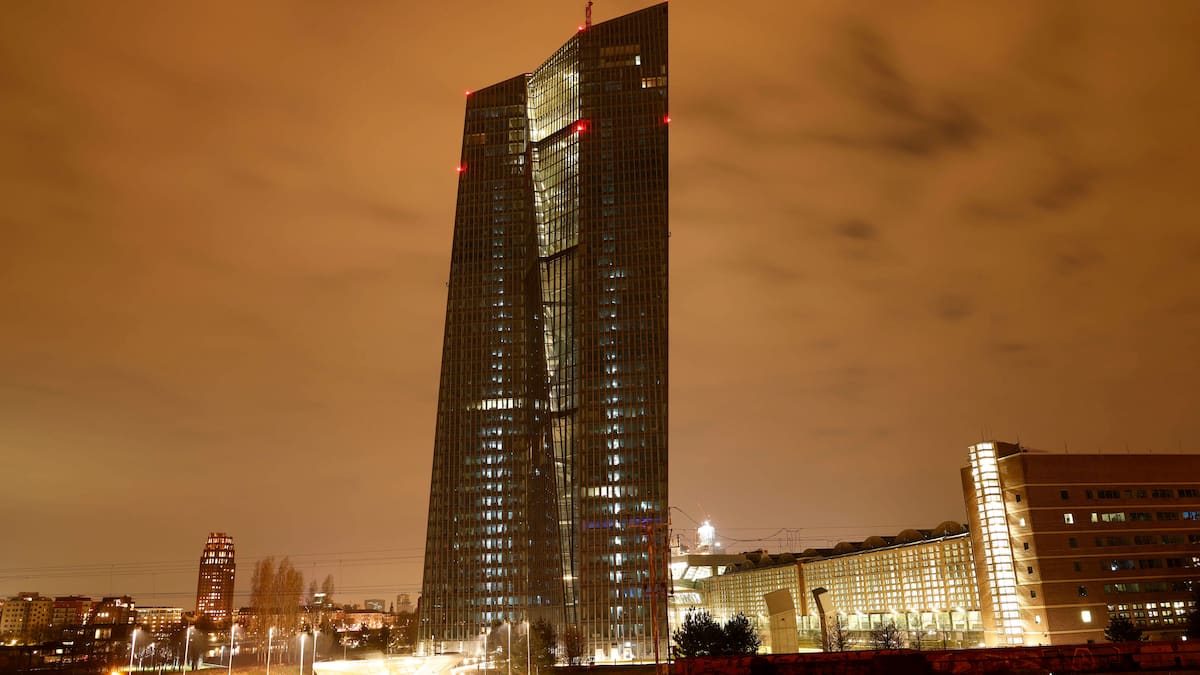
The German stock market reacted negatively to the European Central Bank's (ECB) second interest rate hike of the year and its revised inflation forecasts. The DAX fell by 0.7% to 25,407 points, marking its lowest point of the day. The MDax, which is more sensitive to smaller companies, declined by 1.1% to 31,720 points. The Eurozone-leading EuroStoxx 50 index lost 0.8%.
The ECB raised its deposit rate from 2.25% to 2.5% and increased its inflation projections for the next two years. Higher interest rates typically weigh on stock markets, as they increase the financing costs for companies and can reduce profits. They also make investments more expensive and make bonds a more attractive alternative investment.
"The ECB's decision is not a surprise," wrote Chief Economist Michael Heise of HQ Trust. The situation at energy markets and the Middle East conflict has not improved, increasing inflation risks. Improved economic data could provide additional support for the rate hike.
Individual stock movements were influenced by comments from analysts. Shares of gear manufacturer Renk fell by 2.4% after investment bank Exane BNP downgraded them to "Neutral". Shares of Bilfinger fell by 5%, with analyst Andreas Wolf of Berenberg Bank stating that the company needs to improve its profitability in the second half of the year to meet its annual targets.
Adidas shares fell by 4.3%, continuing a downward trend that began in May. Shares of software companies were also under pressure, with SAP, Nemetschek, and Teamviewer losing 2.7%, 2.2%, and 1.3% respectively. Investors were cautious ahead of the quarterly reports of IT and software giants Oracle and Adobe, which were released after market close in the US.