





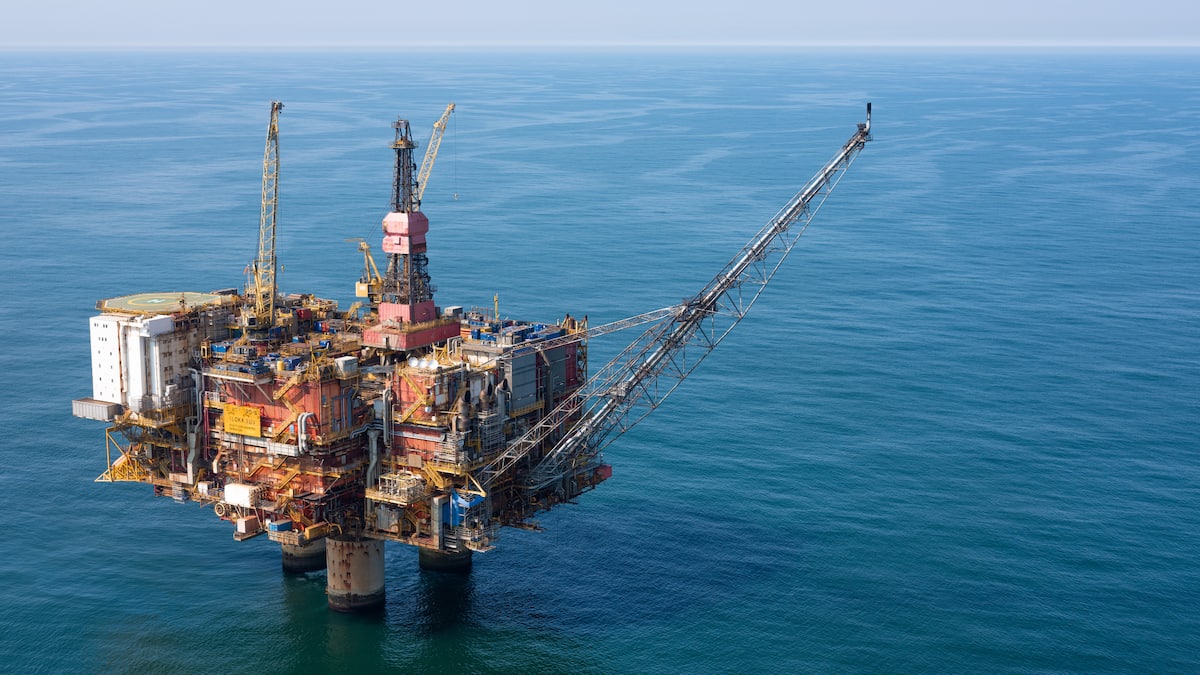
European natural gas prices have reached their highest levels in three years, prompting analysts to reassess which stocks stand to gain or lose ahead of winter. Prices have surged more than 80% since late June, and any move above 100 euros per megawatt-hour would be significantly more damaging to the economy, according to David Zhong, a data scientist at Bloomberg. The continent relies more on liquefied natural gas than during the 2022 energy shock, and supplies from the Persian Gulf remain nearly halted.
Energy producers are the most direct beneficiaries. Equinor, TotalEnergies, and BP have posted strong returns, and the European energy index is already the year's top-performing sector, up more than a third in 2026. Despite the gains, valuations remain cheap: the sector's price-to-earnings ratio has fallen from 15 to 9.6, largely because earnings were artificially inflated by high energy prices. The European commodity index has broadly tracked energy sector gains, rising roughly 30% through 2026.
Utilities show mixed results. Endesa and RWE have outperformed, while Centrica and Italgas have lagged the broader market. "It makes more sense to look at impacts sector by sector and stock by stock," said Karen Georges, equity fund manager at Ecofi in Paris, noting that utilities can be split into winners, neutrals, and losers depending on business models.
Higher inflation and interest rates are also reshaping the landscape. Eurozone inflation accelerated to 3.3% in August, a nearly three-year high, spurring speculation that the European Central Bank will raise rates this week and again before year-end. Bond yields across Europe have reached their highest level in over a decade. Banks, the year's third-best sector behind energy and materials, stand to benefit from wider net interest margins, particularly lenders with variable-rate assets. HSBC, Banco Santander, and BNP Paribas are leading the rally, though the sector trades above its historical valuation average, capping further upside. Insurers face a similar dynamic: rising bond yields improve reinvestment returns, while pricing power can offset claims inflation.
In a surprise, the chemicals sector has outperformed despite being energy-intensive. The Stoxx 600 Chemicals index has risen roughly 16% this year, buoyed by disruptions to competitors in the Gulf region triggered by the Iran conflict. Sebastian Bray, a chemistry analyst at Berenberg, cautioned that investors are still weighing temporary price inflation against weaker demand, expensive credit, and elevated energy costs. He expressed doubt that companies such as BASF and Evonik could deliver profit growth in 2027 once Iranian-related price spikes ease.
Industrial manufacturers face mounting pressure. Building materials maker Saint-Gobain illustrates the challenge: energy-intensive glass and insulation products are exposed to higher input costs even as elevated energy prices dampen construction demand. The automotive sector is similarly hard hit. Stellantis, which retains a large share of fuel-guzzling vehicles, is the worst-performing large European company this year. Gasoline above $5 per gallon has undermined sales of larger engines, and the company's recent decision to pause electric vehicle investments and restart gasoline engine production has drawn criticism from analysts.
On the shipping side, disruptions from the Iran conflict have lifted freight rates, benefiting Maersk, Kühne+Nagel, and Frontline. Airlines recovered from earlier fuel-cost setbacks on hopes of peace talks, but the second half may prove tougher after Ryanair lowered its passenger forecast amid persistent uncertainty.





