



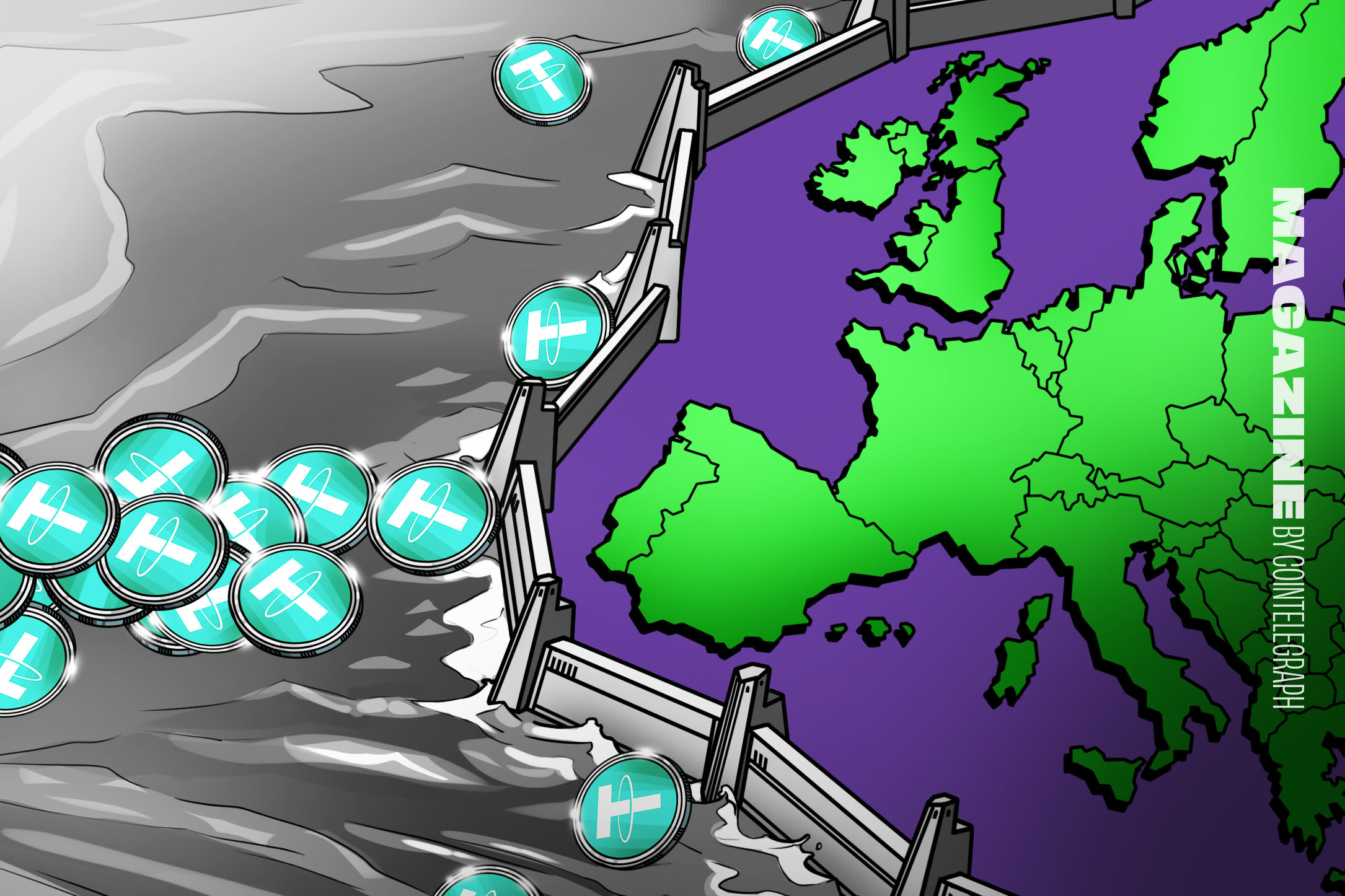
European cryptocurrency platforms are accelerating the removal of Tether’s USDT stablecoin ahead of stricter EU regulations, but global demand for the token shows no signs of weakening. Revolut’s decision to delist USDT for European users by August 31 follows a broader trend as firms comply with the EU’s Markets in Crypto-Assets (MiCA) regulation, which took full effect on July 1. The rules require stablecoins to meet capital, reserve, and redemption standards, prompting exchanges and wallets to restrict access to tokens that fail to comply.
Despite the regulatory squeeze in Europe, data from Artemis Analytics indicates USDT’s supply and demand metrics have remained largely unaffected. Alex Weseley, research and data lead at Artemis, noted that MiCA’s implementation has not triggered significant venue or chain migrations. "The data does not indicate any noticeable change in USDT supply or demand attributable directly to MiCA coming into effect in Europe," Weseley said. "MiCA didn’t trigger a major venue or chain migration."
The resilience of USDT demand stems from its expanding role beyond traditional trading and savings. In Argentina, where access to U.S. dollars has historically been restricted, stablecoins are increasingly used for payments, cross-border transfers, and financial services. Lemon, an Argentine crypto and financial services platform, processed $9.3 billion in total volume in 2025, a 60% year-on-year increase. Transactional users grew 70% to nearly 1.8 million, while stablecoin volume rose 45%. Ignacio Gimenez, Lemon’s business and planning manager, described a shift from stablecoins as a store of value to a financial infrastructure tool. "What we’re seeing is a shift from stablecoins as a store of value to stablecoins as financial infrastructure," Gimenez said. Users can now pay in Brazil via PIX using pesos, receive euros or dollars from overseas, and have funds credited as USDC, or move between bank dollars and digital dollar balances.
Emerging market adoption is also accelerating. Artemis data shows daily active users on Binance Smart Chain rose from about 318,000 in June 2024 to 1.56 million by July 2026, while daily users on Tron increased 44% to around 908,000. These chains are favored for their low transaction fees, suggesting demand is driven by global usage rather than European migration. Weseley added, "That looks like expanding global and emerging market usage rather than a Europe-specific migration, and there’s no clear MiCA-timed break in the chain data."
Regulation is reshaping how European users access stablecoins but not eliminating underlying demand. Maksym Sakharov, CEO and co-founder of WeFi, a crypto financial infrastructure firm, emphasized that users prioritize liquidity, counterparty access, and cross-market functionality over platform availability. "Users do not choose a stablecoin only because it is available on one regulated platform," Sakharov said. "They choose it because counterparties use it, liquidity is deep, and it works across many markets."
European alternatives to USDT face challenges in displacing the dollar-denominated stablecoin, which dominates global crypto markets. Erald Ghoos, CEO of OKX Europe, noted that his platform has not offered USDT to European users for two years, making the latest MiCA deadline less impactful. While institutional interest in euro-denominated stablecoins is growing, Ghoos said the dollar’s dominance in crypto is unlikely to change soon. "What we are seeing from institutional players is interest in creating more EUR-denominated stablecoins," Ghoos said. "But while MiCA may determine which products are available through regulated European gateways, it cannot change the dollar’s role in global crypto markets."



