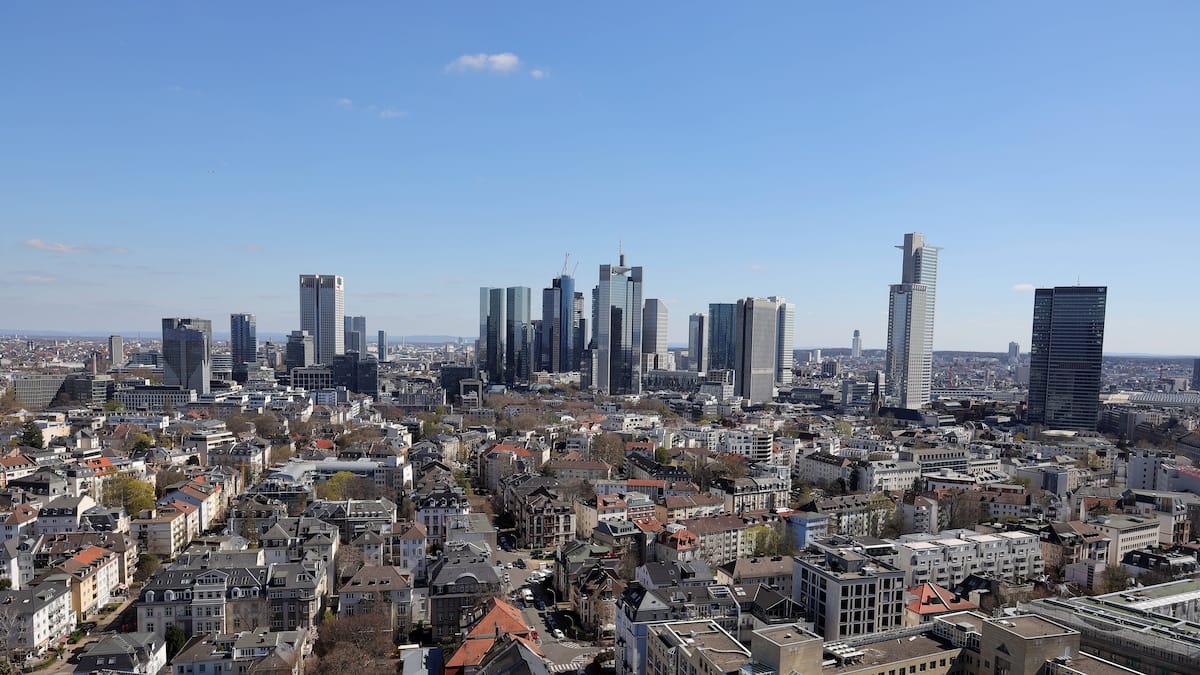
German stocks extended losses on Wednesday, with the DAX index shedding 0.6% to 25,414 points by early afternoon as renewed spikes in oil prices weighed on investor sentiment.
Tensions in the Strait of Hormuz intensified further, with a cargo vessel coming under fire once again. Iran has largely blocked traffic through the waterway — a critical chokepoint for global oil, gas and fertilizer shipments — amid its ongoing dispute with the United States, combining threats and direct attacks on shipping.
The pressure comes shortly after the DAX's recent recovery had stalled precisely at its 50-day moving average, a key mid-term trend line, before the benchmark ultimately closed virtually unchanged.
"Direction-finding remains the dominant theme on the German equity market," said Timo Emden, chief market analyst at CapTrader. "Bulls and bears continue to share the lead, producing a pronounced stalemate." Emden added that the index remains tethered to energy prices: "As long as the energy market sets the pace, the Dax has little room to establish its own rhythm."
Investors are also holding back ahead of the much-watched summit between US President Donald Trump and Chinese leader Xi Jinping. Mikko Huotari, director of the Mercator Institute for China Studies, downgraded expectations for the meeting. "Xi doesn't need a breakthrough in Washington; he needs more time — and the same applies to Washington," Huotari said, noting that avoiding new escalation, particularly in trade, would likely be the top priority.
On the individual-stock front, laser specialist LPKF surged 12% in the SDax after an unnamed leading Asian manufacturer of advanced semiconductor packaging packages issued a statement of intent to acquire LPKF's Nexar Lide glass-processing systems, a deal the company said would benefit from the AI boom.
IT-security firm Secunet climbed nearly 16% following a Reuters report that the German federal government plans to modernize the Bundeswehr's communications networks with new encryption technology in contracts totaling up to 1.7 billion euros. The Bundestag's budget committee is expected to approve a framework agreement with Secunet.
Elsewhere, KWS Saat sank almost 10% in the SDax after full-year revenue and operating profit for fiscal 2025/26 missed analyst estimates, and the seed producer's outlook failed to lift spirits. In the MDax, Siltronic fell roughly 5% after Wacker Chemie reduced its stake further in the semiconductor-wafer maker, while Wacker Chemie itself rose just over 1%.