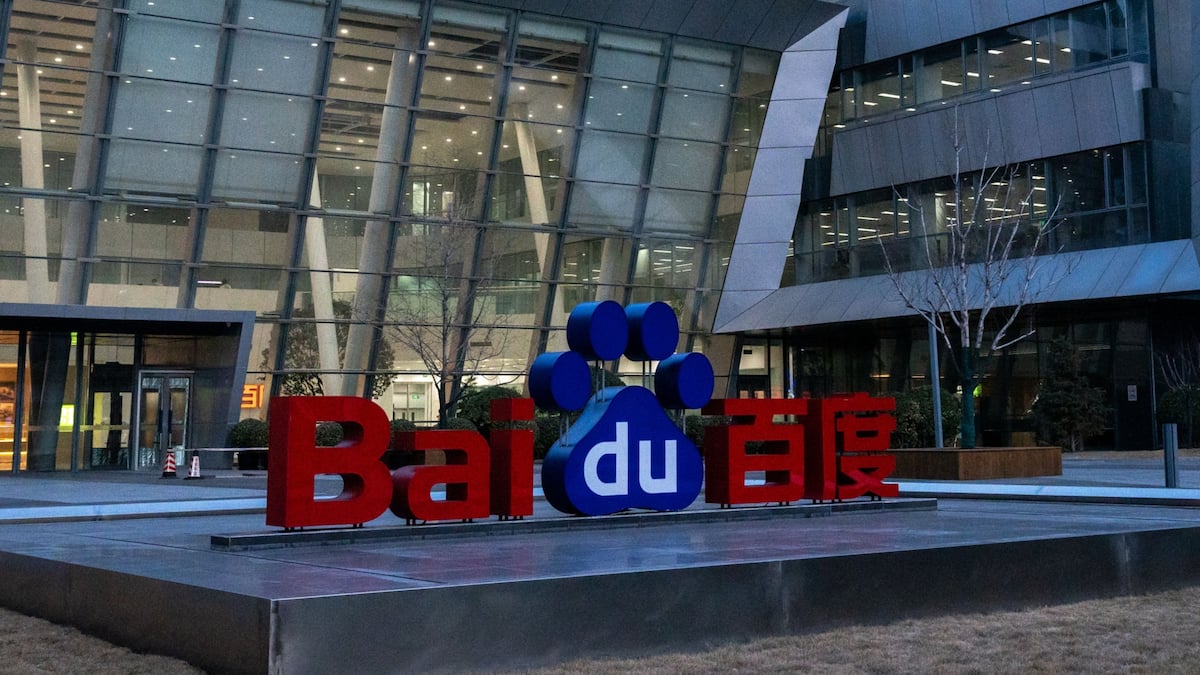
Chinese internet group Baidu reported a 4% year-on-year decline in total revenue to 31.33 billion yuan (4.65 billion U.S. dollars) for the second quarter, missing analyst expectations as weak advertising demand weighed on results.
Online advertising revenue, Baidu’s core business, fell 19% during the period, reflecting subdued consumer sentiment in China and a broader slowdown in digital ad spending. The decline underscores the challenges facing the company amid a challenging macroeconomic environment and intensifying competition in the domestic market.
Baidu’s artificial intelligence division delivered stronger performance, with revenue rising 25% year-on-year. The growth reflects increased investment in AI infrastructure and talent, as the company seeks to position itself in a rapidly evolving technology landscape. However, analysts noted that Baidu’s large language model, Ernie, has not received a major update in months, raising concerns about its competitiveness against rivals such as ByteDance and Alibaba, which have continued to release newer versions of their AI models.
Baidu’s American depositary receipts slumped 12.73% to 90.87 U.S. dollars in early trading on Tuesday, underperforming a 2.76% gain in Alibaba’s ADRs to 128.15 U.S. dollars. The stock’s decline highlights investor concerns over the sustainability of Baidu’s transition from advertising to AI-driven growth.
The company has emphasized its commitment to AI development, but the second-quarter results suggest that its core advertising business remains under pressure. Baidu’s management has not provided updated guidance for the full year, leaving analysts to assess the impact of ongoing economic headwinds on its financial outlook.


