Marrakesh greets visitors with sensory overload: motorcycles weaving through traffic, vendors hawking goods, the scent of spices and the din of the medina. Within minutes, however, the Amanjena resort transforms the experience entirely. Behind high walls, the property unfolds as a serene oasis of water, light and palm trees, where city sounds vanish and the Atlas Mountains frame the horizon.
The Amanjena, part of the Aman Group, distinguishes itself by rejecting the conventions of contemporary luxury hospitality. While many brands amplify exterior spectacle with oversized lobbies and staged photo opportunities, Aman has pursued the opposite strategy for decades. Its approach prioritizes reduction, privacy and time—values that have grown rarer—and arguably more luxurious—than marble or gold in an era of constant acceleration.
General Manager Tim Weiland embodies this ethos. Rather than confine interactions to the resort, he often ventures with guests beyond Marrakesh’s city limits. One evening, without revealing the destination, he drove a group into the Atlas foothills to an isolated ruin. From this vantage point, the landscape unfolds: the city below, the snow-capped peaks behind, and the desert hues of sunset. The experience, Weiland noted, is meant to be remembered, not captured on a phone.
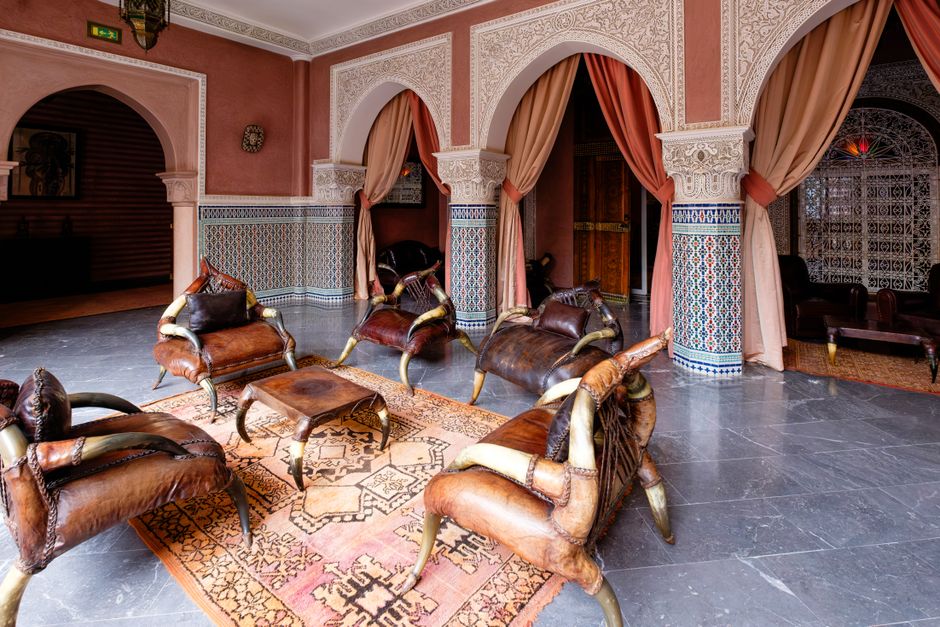
The resort’s architecture reinforces the philosophy. Drawing on Moroccan palace forms without resorting to folkloric clichés, it uses water features, long sightlines and structured greenery to cultivate calm. Guest rooms follow suit, with warm materials, clean lines and minimal furnishings that encourage contemplation over distraction. Even breakfast under open skies becomes an exercise in stillness.
Beyond its walls, the Amanjena maintains ties with a nearby Berber village, where guests are welcomed for meals of couscous, vegetables and tea. The visit unfolds organically, with children playing freely and no staged performances. Weiland shares stories of the region’s centuries-long tradition of coexistence among Jews, Christians and Muslims—a lesson in cultural depth rather than curated spectacle.
Evening dinners in the Agafay desert epitomize the brand’s approach. As daylight fades, the landscape shifts from ochre to gray to deep blue, illuminated only by lanterns and the quiet of the desert. The meal—maroccan cuisine under the stars—becomes a study in understated luxury, where the absence of noise and activity feels deliberate.
In an industry that often equates luxury with scale, noise and constant availability, Amanjena offers a counterpoint: experiences that resist planning, photography or performance. The resort does not sell nights; it offers perspectives.